|
Last Summer I made a scaled down copy of the Braddock-Washington sash for Carlyle House. The word is that the display is now complete, and viewable to the public. Here is the photo they sent me, the mannequin wearing the general's uniform .... complete with sash. 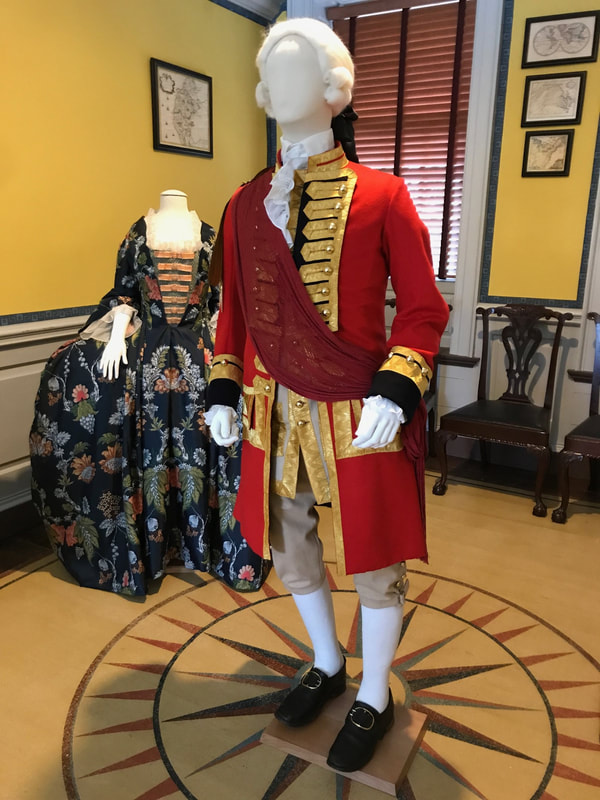
2 Comments
En route to the British Museum, I stopped off to visit a friend who lives near Sheffield. I met Andy and Elaine a few years back. Elaine really wanted to know more about sprang. They were, at that time preparing to participate in an event, re-doing the battle of Marathon in Greece ... he was going to be one of the bad guys. I made him a pair of leggings, appropriate to the time period, and based on research by Dagmar Drinkler. 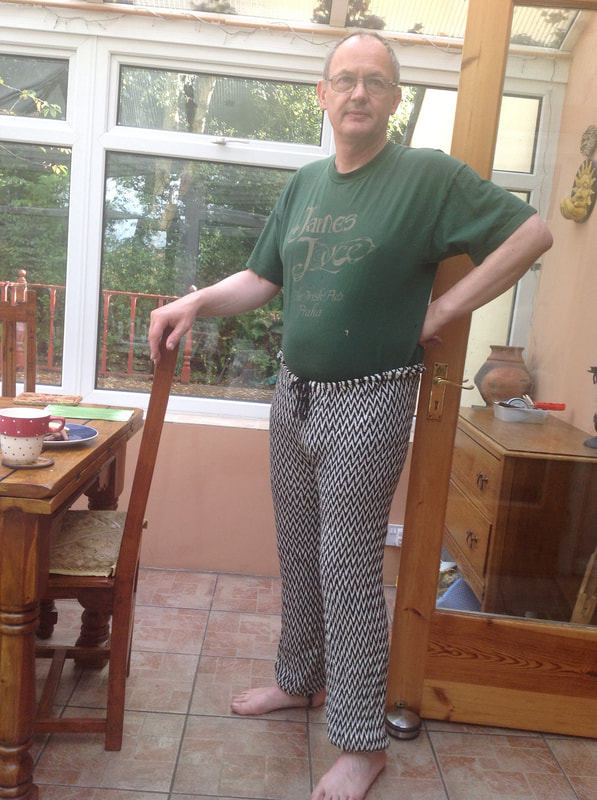 It seems that Andy has worn these leggings to several events. Imagine my surprise when I read on the internet that sprang is not at all suitable for leggings! Andy showed me a post indicating that, with one broken thread, the pants will fall apart. This, I thought, is the perfect moment for a bit of testing, some experimental archaeological if you will. Andy allowed me to cut a thread in his leggings. To make it a fair test, I cut a thread at the knee, a place that would be affected by movement of the leg. 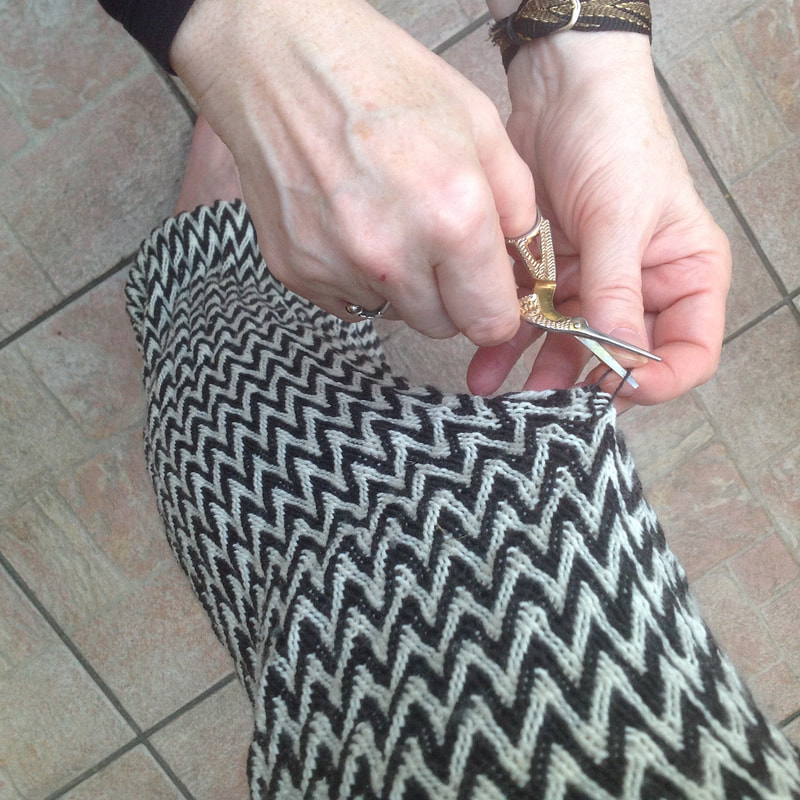 Andy took a picture of me cutting the thread just in front of his left knee. 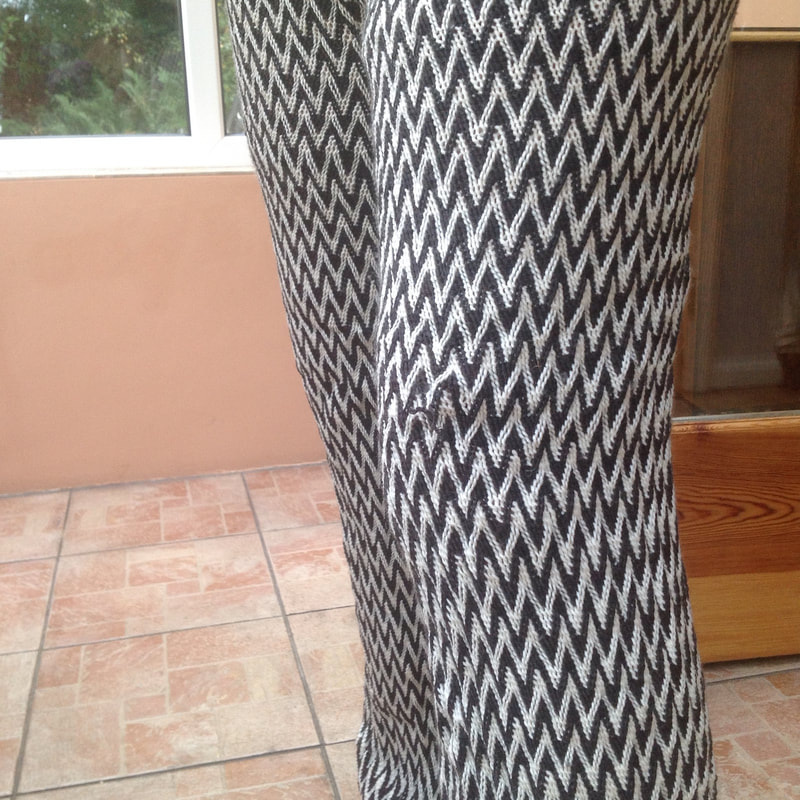 Here you see the broken thread at the left knee. Andy then went outside to do some work in the yard. 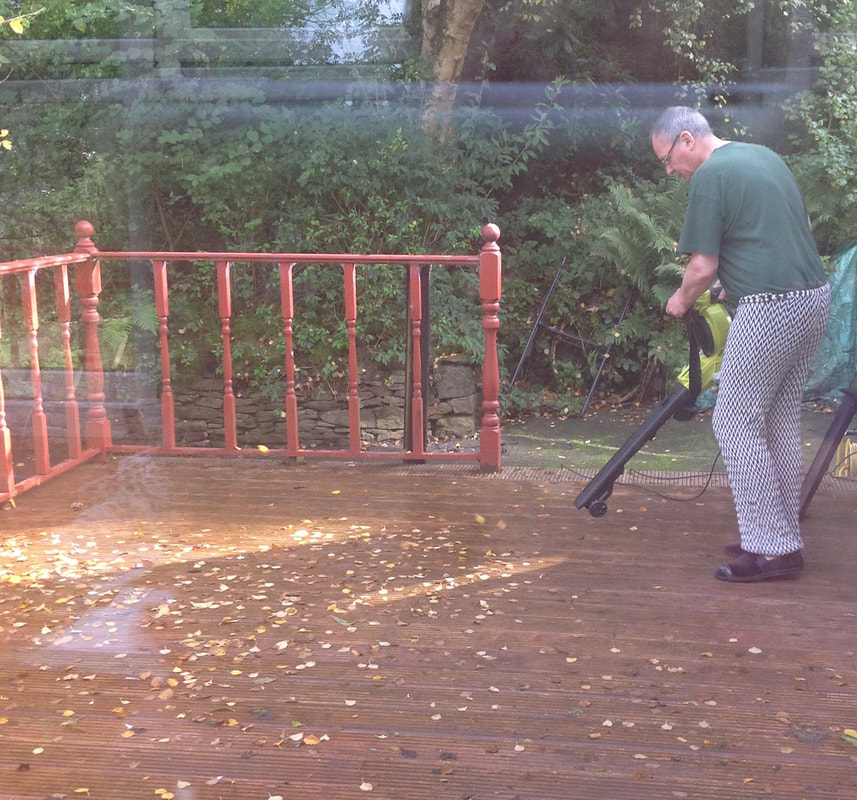 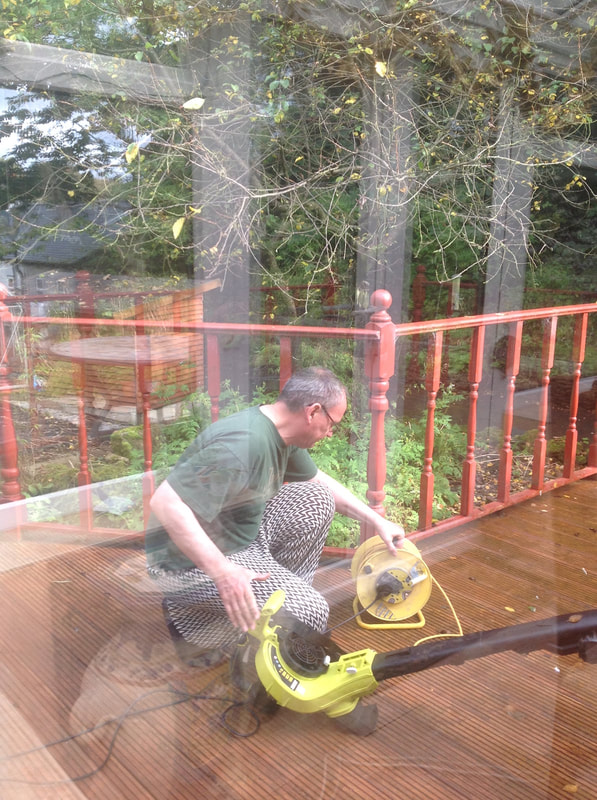 He cleared his deck of the leaves, and tended to his leaf-blowing machine. His leggings stayed on the entire time ... no falling apart ... no falling off. Indeed no increase in the size of the hole. The wool threads stayed put. 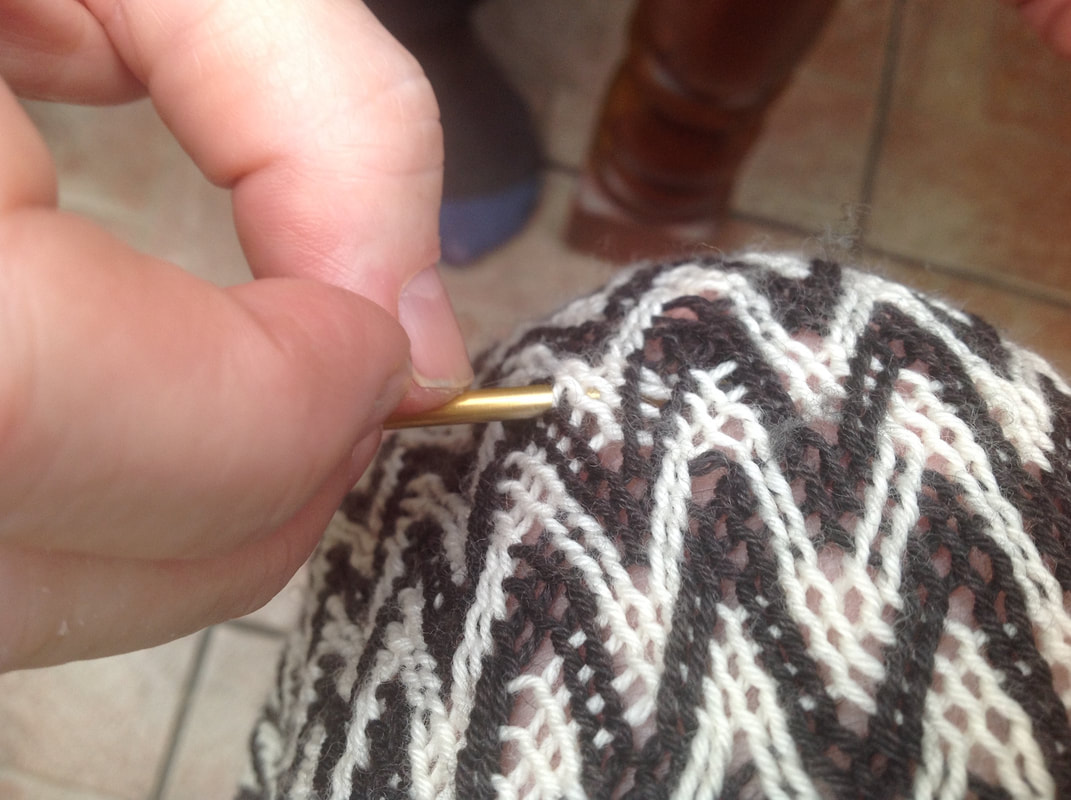 Wool has a certain 'grabbiness' to it's surface, and the wool sock-yarn that I had used to make the leggings is no exception. Yes, I've seen silk sashes in museum collections with long vertical slits, where a thread broke. The slipperiness of silk as well as the simple interlinking structure would allow a slit to develop ... but the slit will only open up so far. At some point the length of the cut threads will, itself, prevent further un-doing. The structure of the zig-zag pattern in these leggings also helps prevent un-doing. I repaired the damage I had caused, tied a knot to mend the cut ends, and tucked the knot to the inside of the leggings. 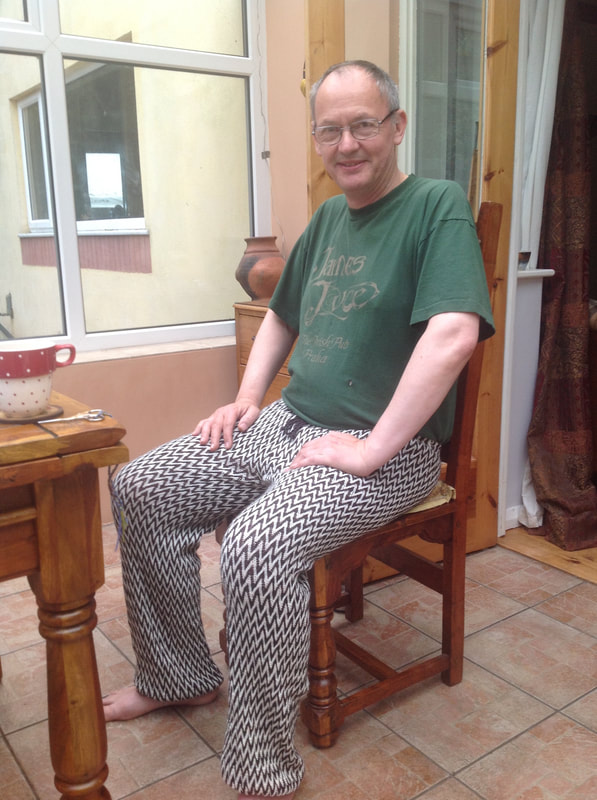 The damage is now repaired, the knot almost imperceptible.
A big Thank You to Andy Cropper for permitting me to carry out this test. I attended the 2017 CIETA conference, held at The Hermitage. 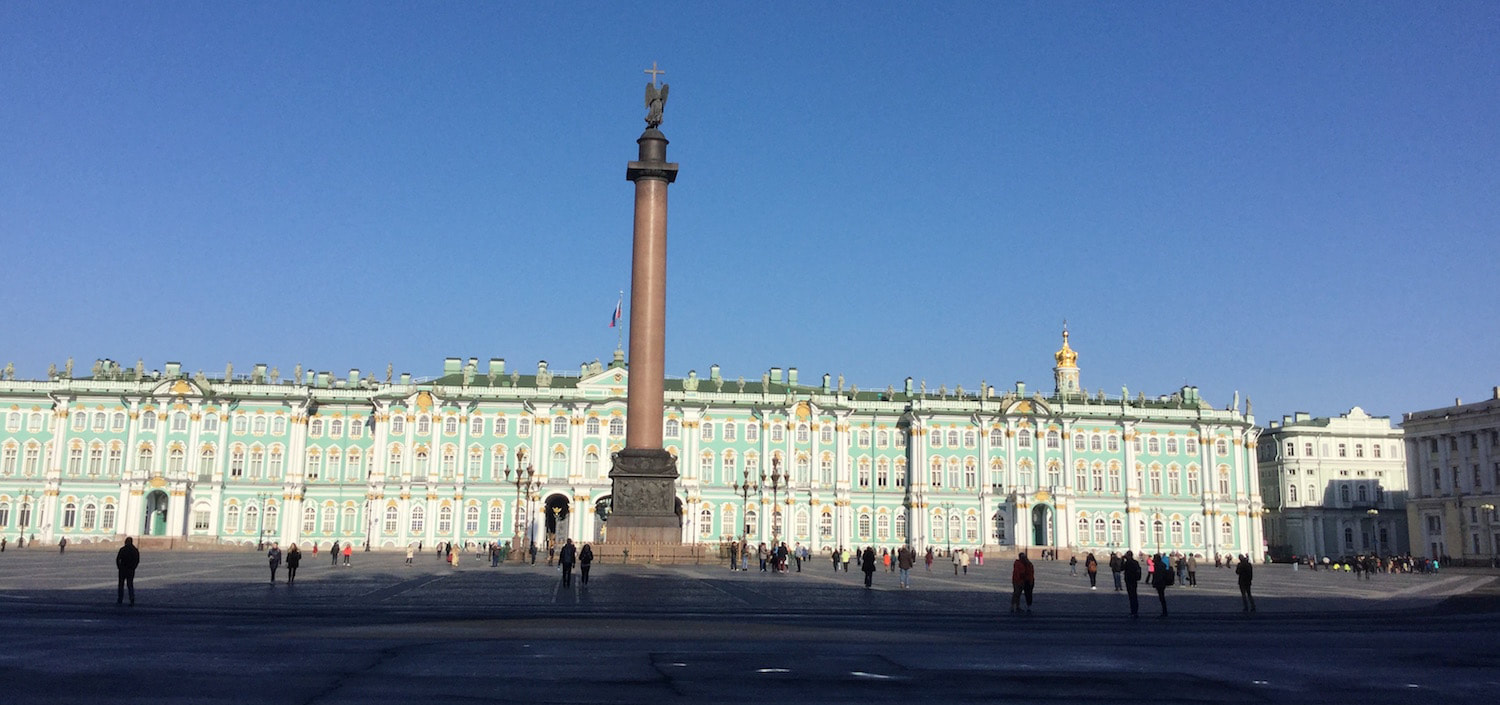 Very interesting discussions of textiles as symbols of power. The Hermitage treated us to a special exhibit of their collections ... including a display featuring garments worn by Peter the Great. His military uniform included a sprang sash. 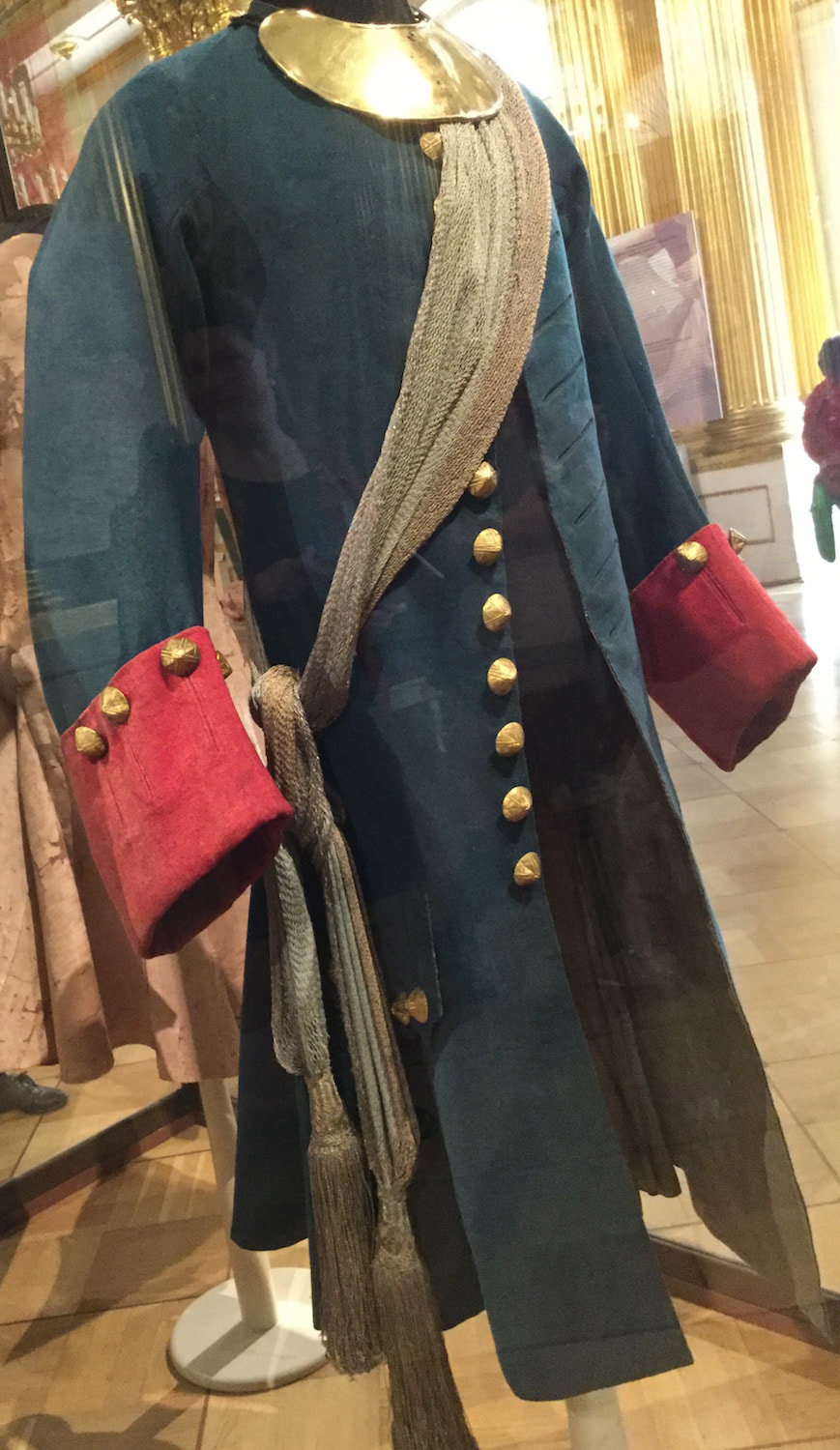 The curator told me that the sash originally was tricolore: red, white, and blue. The fiber is silk with silver threads worked in. You can tell it is sprang, because one side features an S twist to the stitches, the other side features Z twist. There is a line at the shoulder where the S and Z meet.
The idea of sprang mittens has come up ... twice within the last week. A researcher colleague of mine found a pair of sprang mittens at a textile market in Bavaria. The seller had no provenance, but they look like sprang mittens in the collection of the Brussels History Museum, that date to the early 1800s. 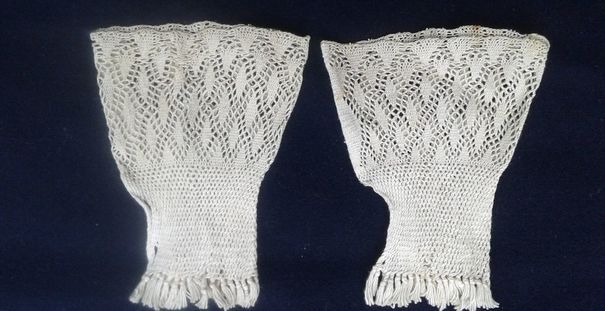 And then and e-mail from someone who took my sprang class earlier this year, Jenny from Regina. She sent me photos of her explorations since that class, including a photo of a lovely sprang mitten. 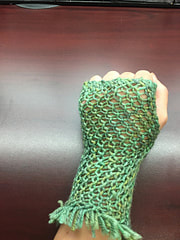 Mittens are a great place to explore sprang. Make two rectangles, cut them apart, tying knots at the cut ends. Sew each piece into a tube, and voila, two fingerless gloves, aka, mittens. Use the opportunity to explore patterns.
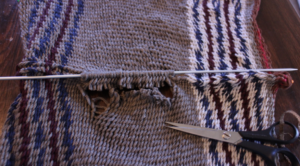
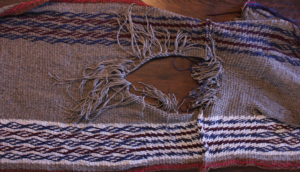
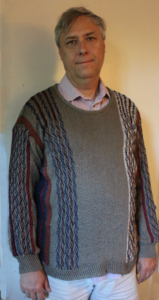
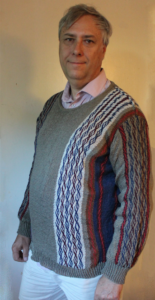
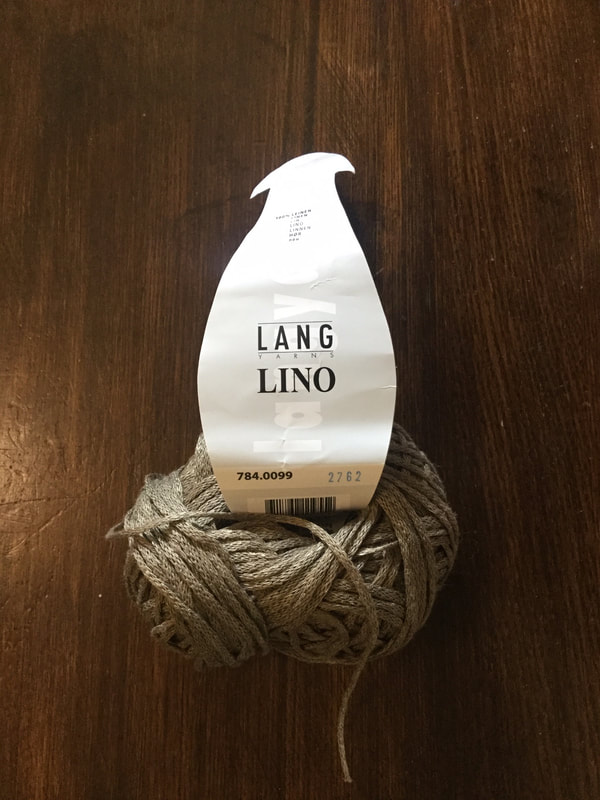
I’ve been wanting to make a sprang shirt or sweater for my husband. He says that wool is always too hot. So I found some linen yarn, and made a vest recently. I set up a ‘false circular warp’ to make the work easier. I worked from hem towards the shoulders. Here is the front and back on the frame, the sprangwork done, a knitting needle in the meeting place at the shoulder. 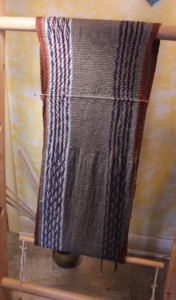 Front and back all finished, ready for the chain line and neck hole When the two sides met, I chained from selvedge towards the middle, starting at the right side, working towards the place of the neck hole, and then starting from the left side and working to the place where I will put the neck hole. I then cut the threads across the center line, just to the front of where the chain line should be. I took photos as I formed the neck opening, cutting threads and tying knots.
To cover up the knots, I knitted a length of i-cord covering the knots and encircling the neck hole, giving it a nice finished look. Measurements now indicated that the width was insufficient for the intended waistline … I expected that, and made side panels. This started out as a warp that was a bit shorter than the front-and-back. I made the side panels both at the same time, cut them apart, as I tied knots. 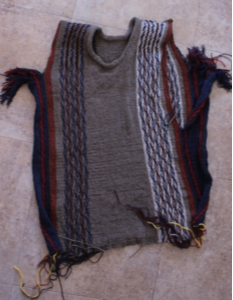 Assembly plan Now for the sleeves … made two-at-the-same-time.  Assembly plan But before assembling, I added ribbing to the cuffs and at the waistline. 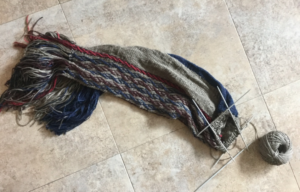 4-needle knitting at the wrist And then the final assembly to make a lovely sweater for him.
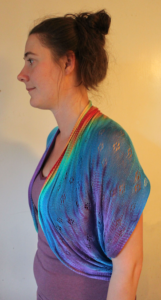
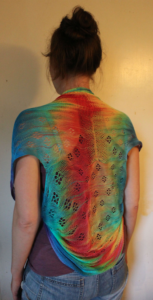
There was this skein of yarn that I purchased a while back from Redfish, a rainbow dyed tencel. I’ve been meaning to work it up into something. Last month at the Regina Shindig, I was inspired by Terri Bibby, and her Saori techniques. She demonstrated an origami approach to garment design. With this in mind, I set up that rainbow dyed skein on a circular warp, and created a circular piece. 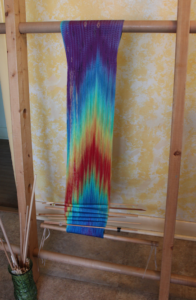 Rainbow warp on my frame Once the sprang was finished, I chained across the place where the two sides met. Here is my schema, how I transformed the circular warp piece into a shrug. 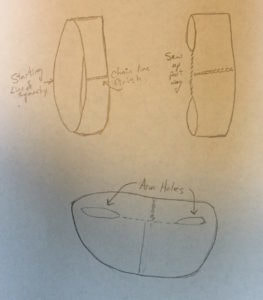 Schema for the shrug I folded the circular warp piece, trying to align the color scheme. To make the color scheme work out best, the chain line does not exactly line up with the starting rows. I sewed up part of one side, leaving open places for the arms, and it became a shrug.
Here I am, on a 3-city teaching tour of Colorado. Spring weather is living up to it’s reputation, sunshine, rain, snow, sleet, and then sun again. 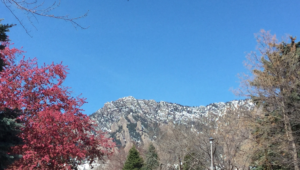 mountain view I am teaching classes in Montrose, Boulder, and Colorado Springs. 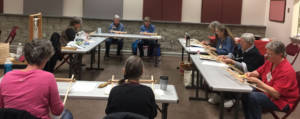 So happy to be teaching individuals who are so adept and eager to learn. Everyone works on her own frame, creating several sample pieces. In the introductory class, we explore the basic interlinking stitch, and then some variations. You learn the basic stitch, some finishing techniques, and then how to start from ‘scratch’. My hostesses to date have been lovely. Many thanks to Bobbie, Mary, Janet, Sue, and Cheryl. I’ve been treated to a tour of Black Canyon of the Gunnison Park, and a drive through the Rockies, from Montrose to Boulder. Looking forward to a tour of the Schacht Loom factory. In-between teaching, I’ve kept myself busy working on some Coptic designs, working out the pattern, and then testing them by making sample pieces. 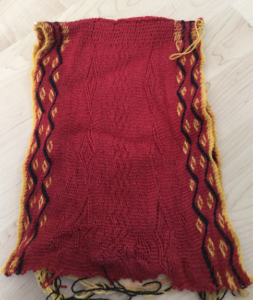 Red Coptic bonnet, inspired by a piece in the Kelsey Museum, 13395 Working on a new vest. A friend allowed me access to her stash, two boxes of yarn skeins, a pallet, varying from green to red. 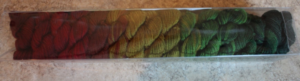 A box of several small skeins, the color shifting with each skein IMG_6430 I set the yarn on my frame, false-circular warp, and the colors blend nicely, one into the other. And here it is, partially done. I worked in some twined stitching, dragging colors along into other color zones. We’ll see what it looks like when it’s finished. 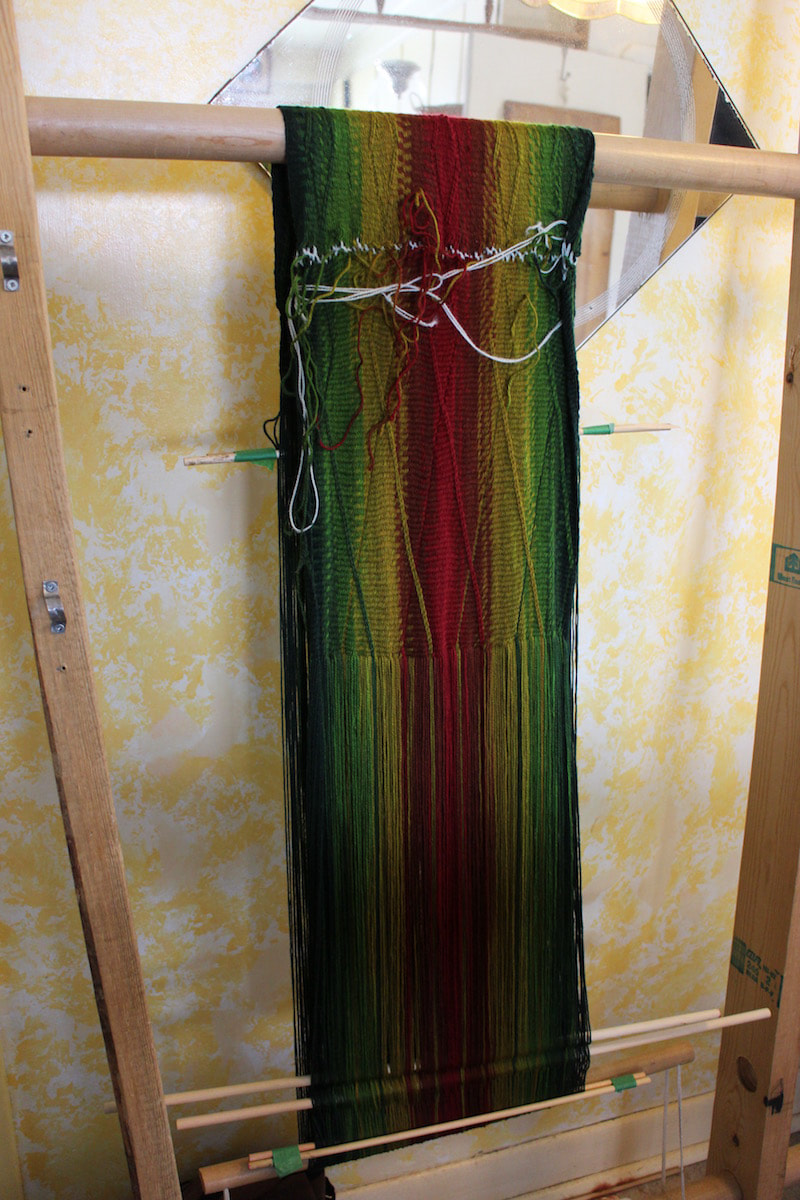 The white string is because I'm working a 'False Circular' warp. The white strings hold the initial loops, which will eventually become hemline at front and back. A week later the cloth is now finished. How to form the neckline? Sometimes the V neck stretches stitches, causing a less-than-desiralble pattern. I’ve decided this time to try cutting threads near the center line. Two inches up the front side I cut threads in pairs, so I can tie them in knots. At the back of the vest, I tied the knots right there along the center chain line. On the front I unravelled a center thread to form the slit down the front, and then sewed it partway back up toward the chain line. This thread I tied with a partner thread. The other threads I tied at intervals to create the V neckline. 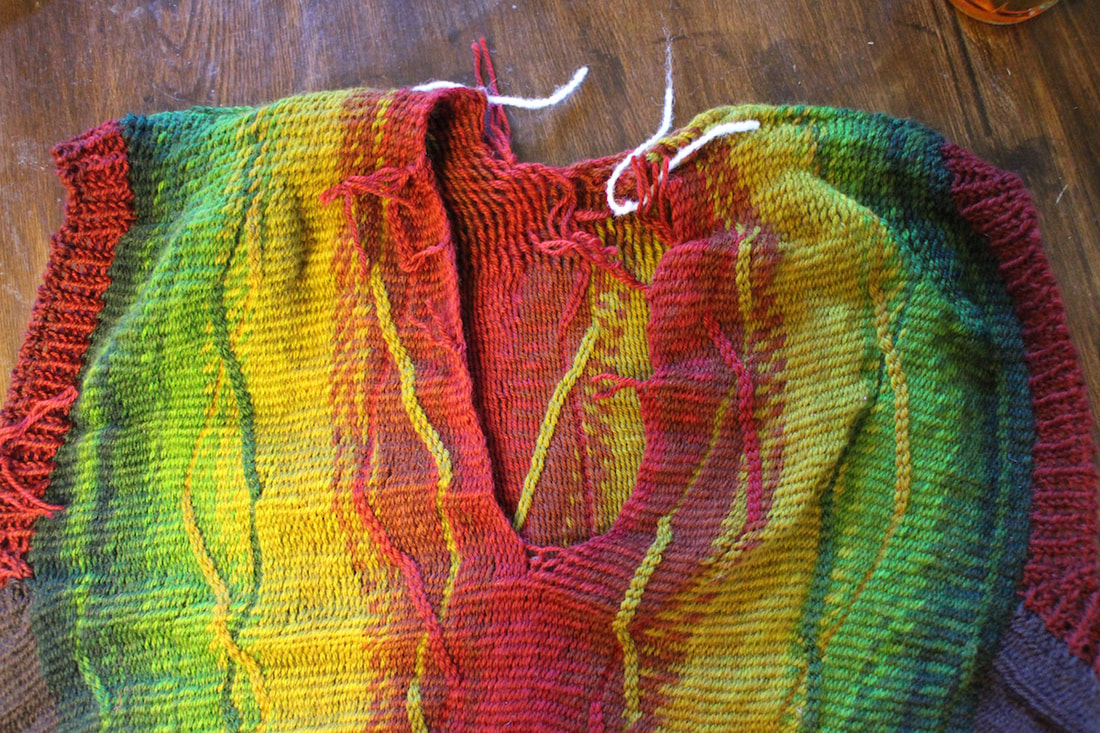 Cut threads unravelled and tied in knots, forming the neckline. 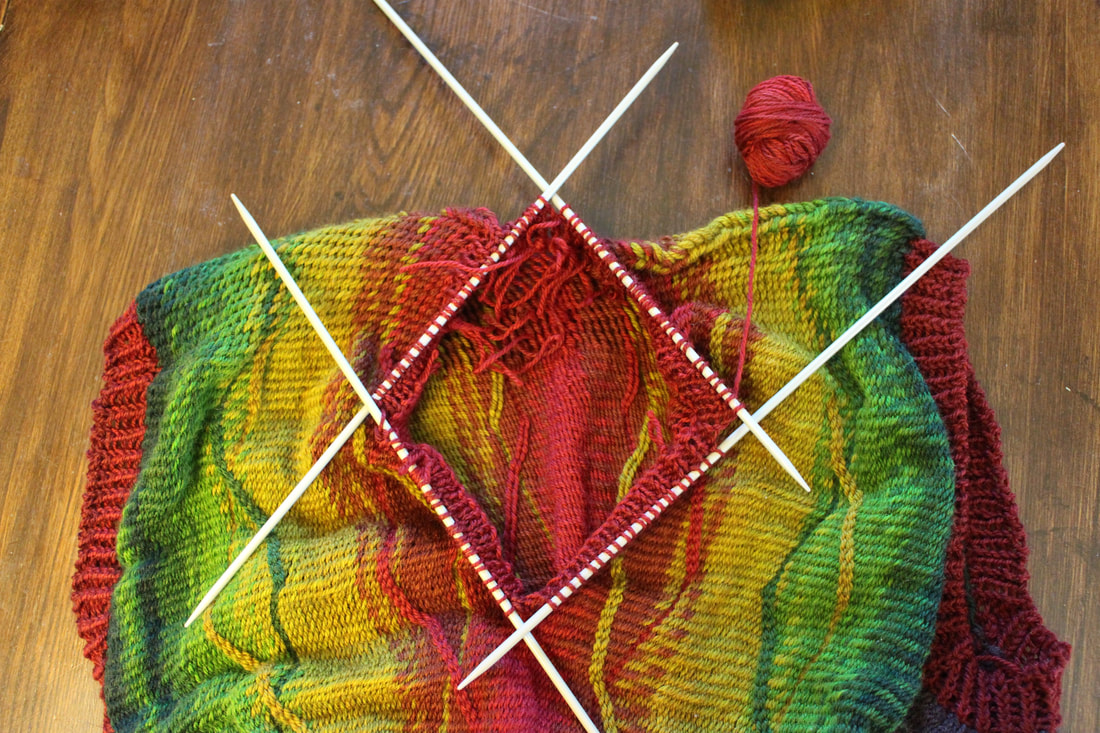 Pick up and knit stitches (rib pattern) around the neck to form a nicely finished edge. 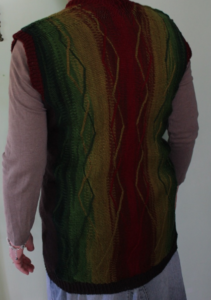 the back 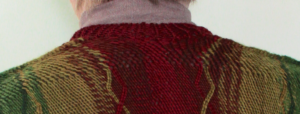 Close up at the back of the neck I find this method makes a much nicer finish at the back of the neck. 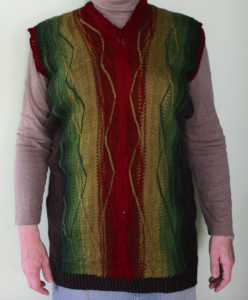 The front of the finished vest A few years back I used some of my single spun wool to make a bonnet. The wool was quite dark in color, and does not photograph well. 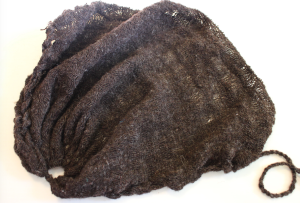 I’ve since made another bonnet, this time using some commercially spun linen. 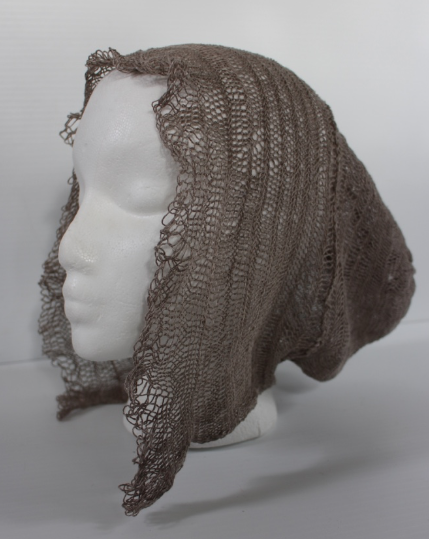 The pattern is based on a bonnet in the collection of the Danish National Museum in Copenhagen. The pale color in the linen makes it easier to see the stitches. 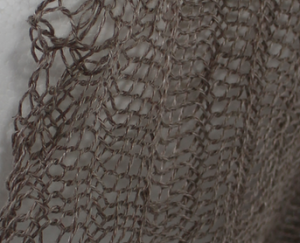 It is really a few simple stitches, combined to make an interesting pattern and a lovely bonnet.
Now, examining historic hair nets, some of them were made from tightly spun singles. I experimented with some tightly spun wool, not treating the overtwist, nor waiting for it to settle down. It worked just fine. The weaving was easier than I expected, not really hampered by the extra twist. The finished piece, well, yes, I soaked it and blocked it twice, but it looks just fine. The Art and History museum in Brussels, Belgium, has a lovely collection of sprang items, including a pair of socks. These socks feature sprang ‘uppers’ and a knitted sole. I decided to try my hand at this. 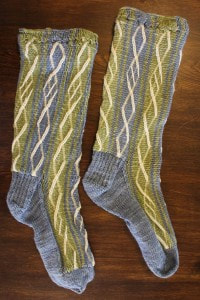 I began with a 3 ft long (75 cm) warp. 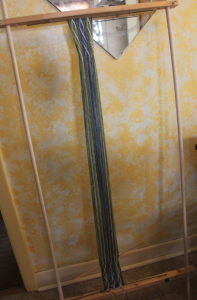 This will form the top of the foot and front of the leg. I worked these threads for about six inches (15 cm). I then added more warp. 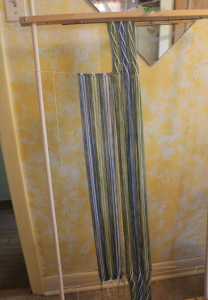 I attached the second, shorter work to the frame beside the original warp. This now, is the complete warp for the ‘upper’ of the sock. 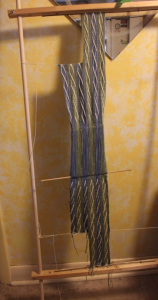 I separated the two sock uppers, cutting along the midline of the warp.
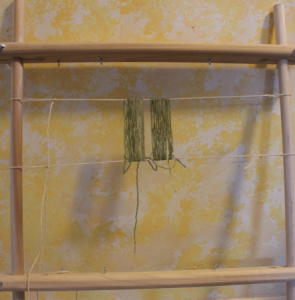
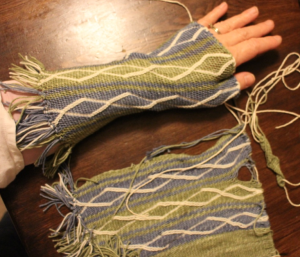
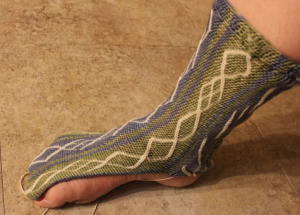 The upper is now complete. All that is missing is a knitted sole. OK, to be honest, when I measured out the second, shorter warp, on a warping board, my first attempt was too long. I realized this as soon as I tried to mount the second warp beside the first. I should have warped directly onto the sprang frame. What to do? I am too lazy to un-wind that warp, and do not want to waste the yarn … so I set that warp aside. Now that the socks are complete, I think I’ll try a pair of fingerless gloves. 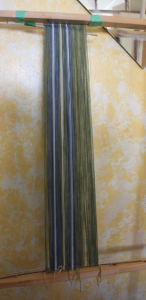 Here’s that second warp, plus some more threads. I started working at the fingers. I’ll have one hole for the thumb, and another larger one for the rest of the fingers. This means I started out working two separate strips.
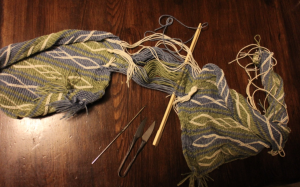
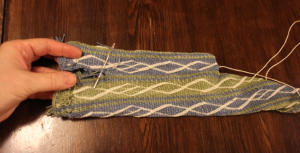
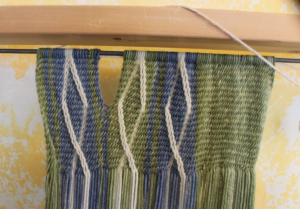
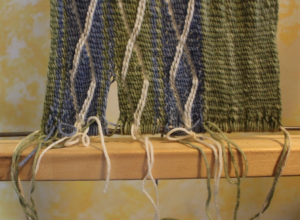
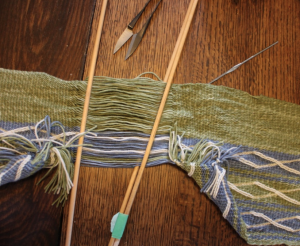 Separating the two gloves. Tying small knots. Now, making these up into gloves, I decided I needed a small bit to breach the gap between index finger and thumb. So, I set up two tiny warps.
|
Categories
All
Archives
May 2023
Categories
All
|
 RSS Feed