|
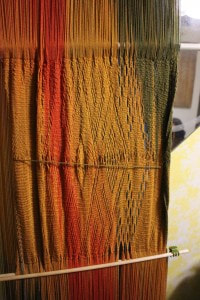
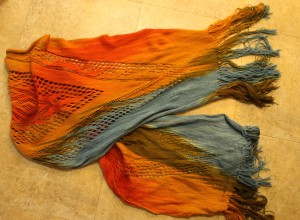
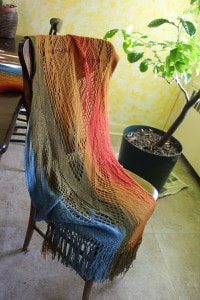
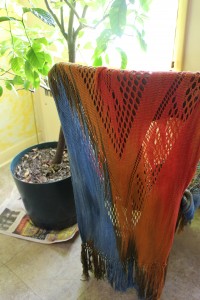
Inspired by that famous shirt, found near the Tonto Ruins in Arizona (check out http://www.statemuseum.arizona.edu/coll/photographic/tonto_shirt.shtml), I’ve created a shawl. The material was ‘sock yarn’ hand dyed by Glenna Dean of Abiquiu Dye Studios. It began as an extra long hang of yarn, eight ft in circumference. I asked Glenna to do a special ‘rainbow dye’, that is, to dye in sections, creating a multicoloured warp.
Here’s the finished shawl. I knotted the ends to form a fringe.
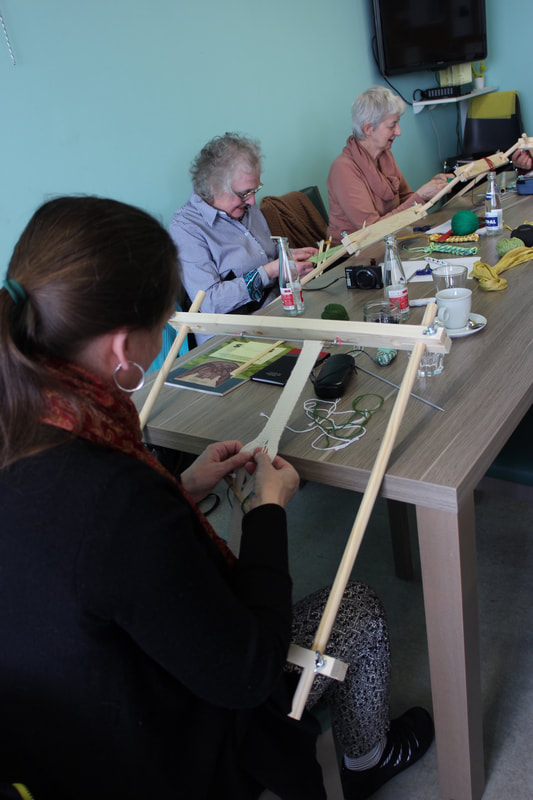
Now I’m working on a proper replica of that Tonto Shirt. I’m collaborating with the Arizona State Museum, who permitted me to photograph details of the shirt, and Louie Garcia, who will hand-spin the required amount of cotton (no small feat). Not wanting to mis-calculate the yardage required, as well as verifying my pattern-writing skills, I’m presently working on a ‘practice piece’. 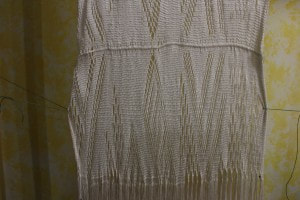 Looking at details of the original, I noted that the loops from front and back, where they meet at the shoulder line, are looped around a common thread. This made me think of Peter Collingwood’s ‘false circular warp’ setup. That’s the way I set up this shirt. It means I need a frame that is only half as long. Now, re-examining photos I have of the front and back, I see that the back was turned over before being attached to the front. I’ll not be able to use this common starting line as the shoulder seam. I’ll have to separate front from back, flip one over, and then attach at the shoulder.
0 Comments
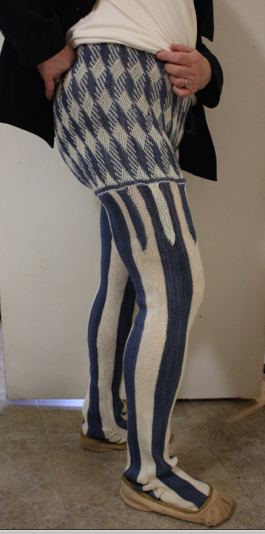
October 2014 was spent in European travels. The impetus for the trip was the invitation to present information on sprang at the Early Textile Study Group conference in London. The topic for this year’s conference was Peter Collingwood. Dagmar Drinkler agreed to present her research on the subject of ‘tight fitting clothing in antiquity’, and I contributed my experience making leggings.
I did take the time to tour around London, spent a day on a double-decker bus.  Big Ben and the London Eye from the tour bus While in the UK, I stopped in to visit friends. First up was Oli and Erica of Weavolution. They hosted me while I taught a finger weaving class to the Cambridge Weavers.
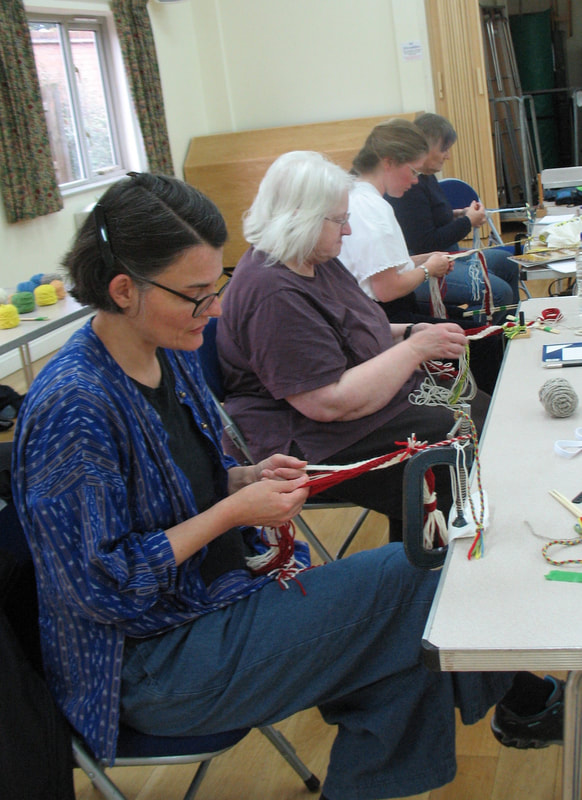
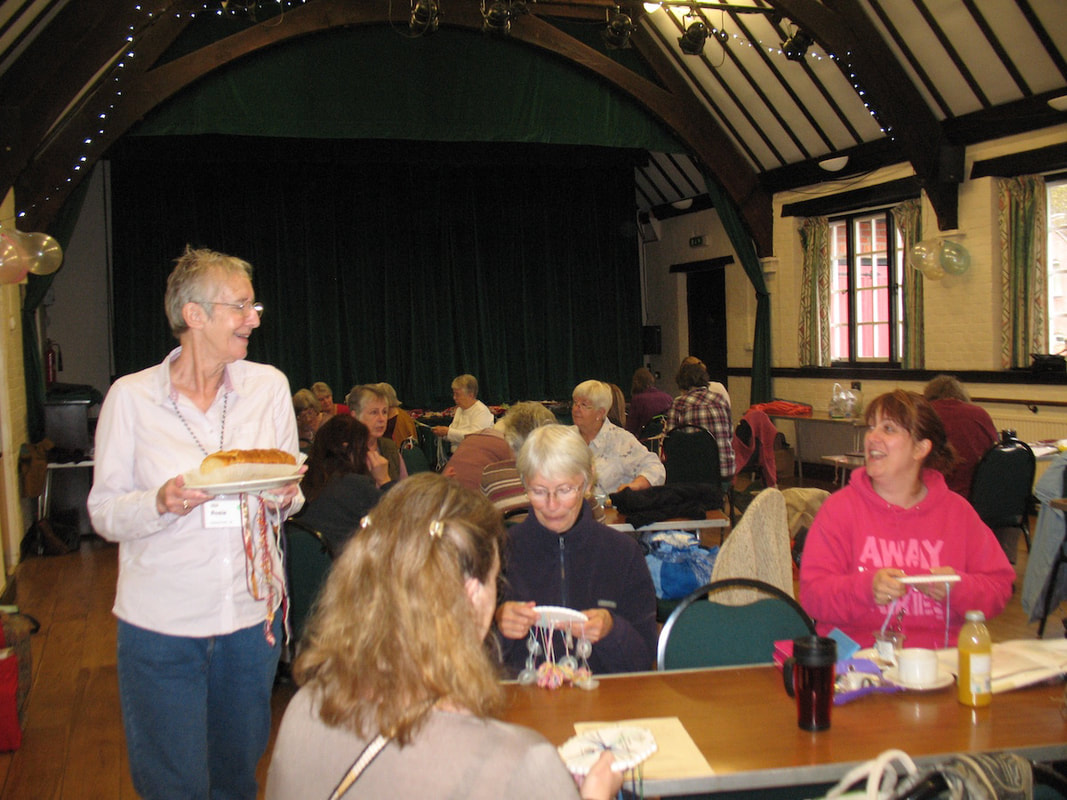
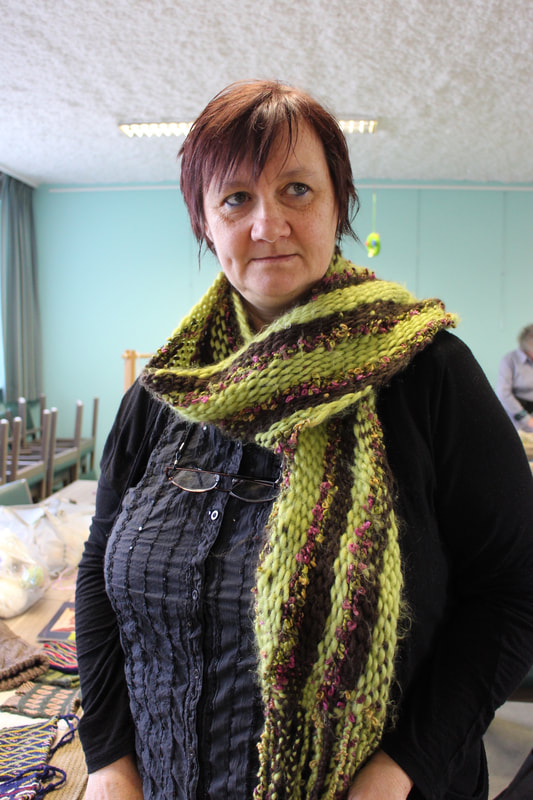
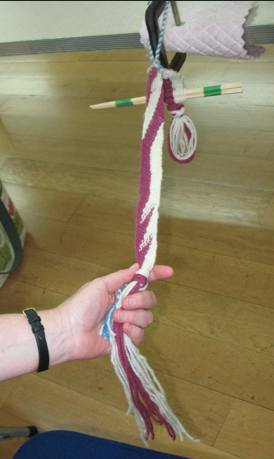 Members of the Cambridge weavers were very quick to pick up the technique, and master some basic patterns. Next I visited my friends Elaine and Andy. They toured me through Yorkshire, including a trip to Chatsworth House, an amazing place.  Places like Chatsworth House helps one understand Downtown Abbey. Elaine and I talked sprang, and the probability that ancient Persians and Celts work sprang clothing. Back in London, I stopped in at Alexandra Palace for the Knit and Stitch show, on Oct 9, minding a booth for The Braid Society, and gave a class on finger weaving: Weave a scarf on the train. 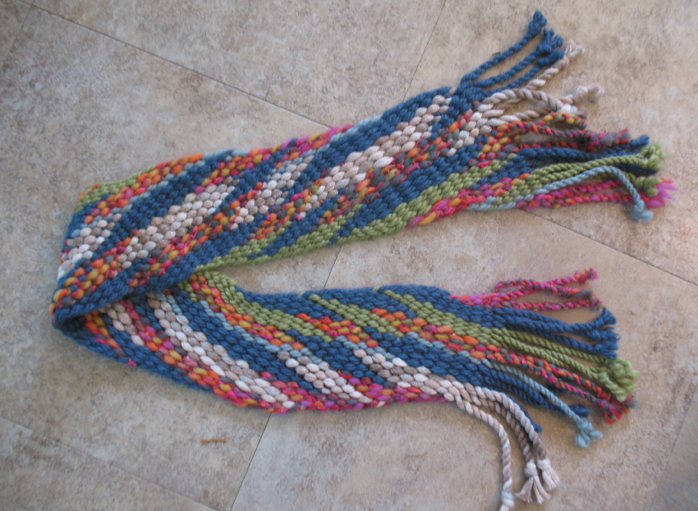 This is the finger woven scarf, made on the airplane and train. After the Early Textile Society conference in London, I travelled to Reading. There I was able to have a sneak preview of an amazing collection of braided pieces in the Reading Library, the Braid Society’s Biennial Exhibition. 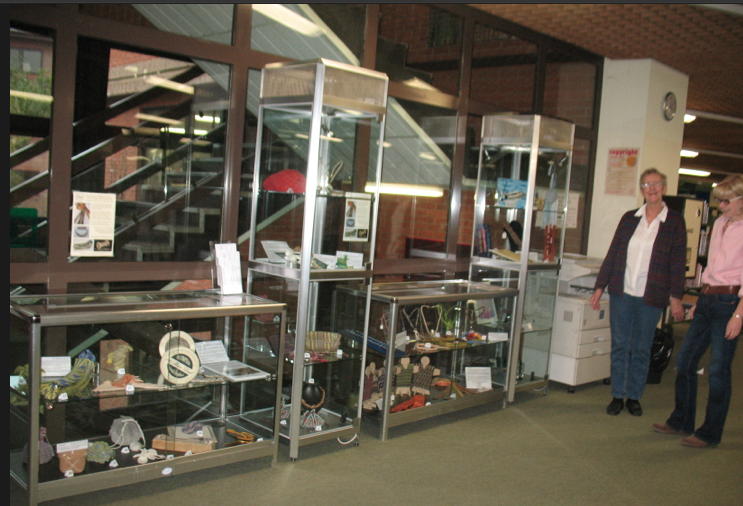 Rosie and Helen finish up mounting the display in the Reading public library. Near Reading is the town of Aldebourne where individuals interested in diverse braiding techniques meet regularly in the local town hall. Thanks to Sally, and to my hostess Rosie, I taught another workshop there, this time finger weaving (last time was sprang).
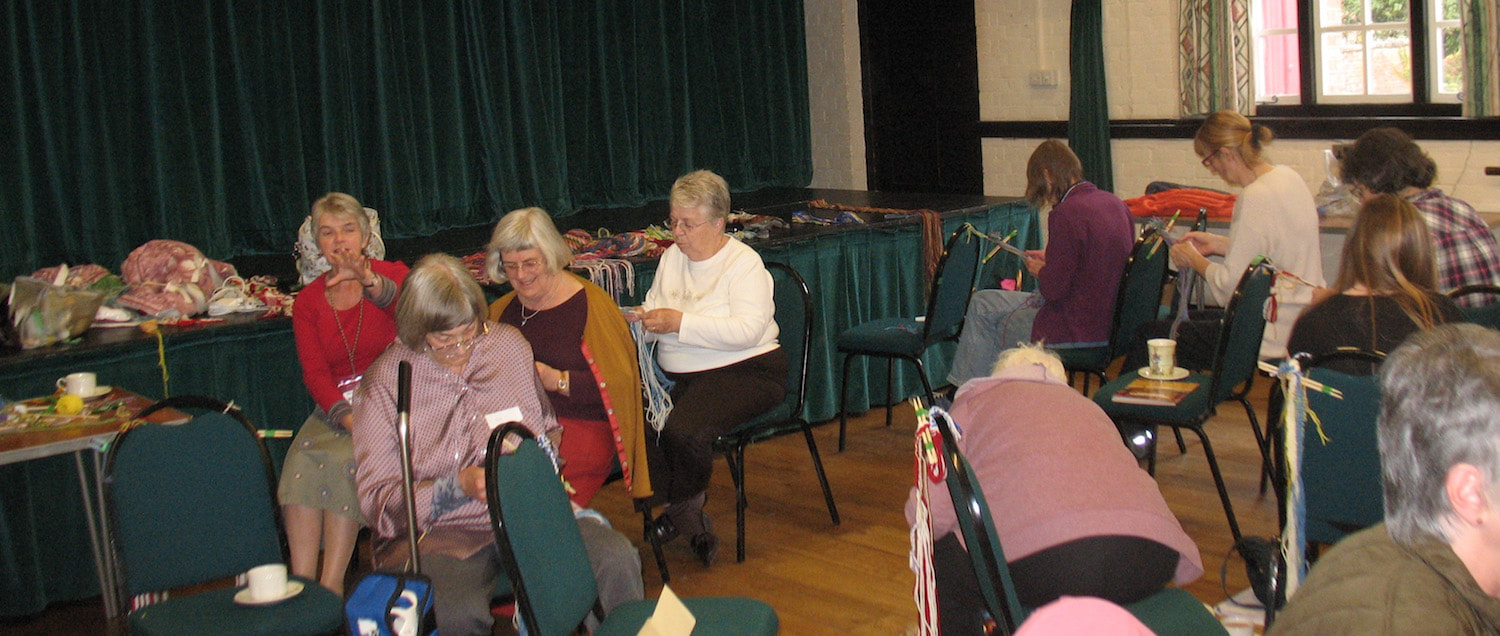
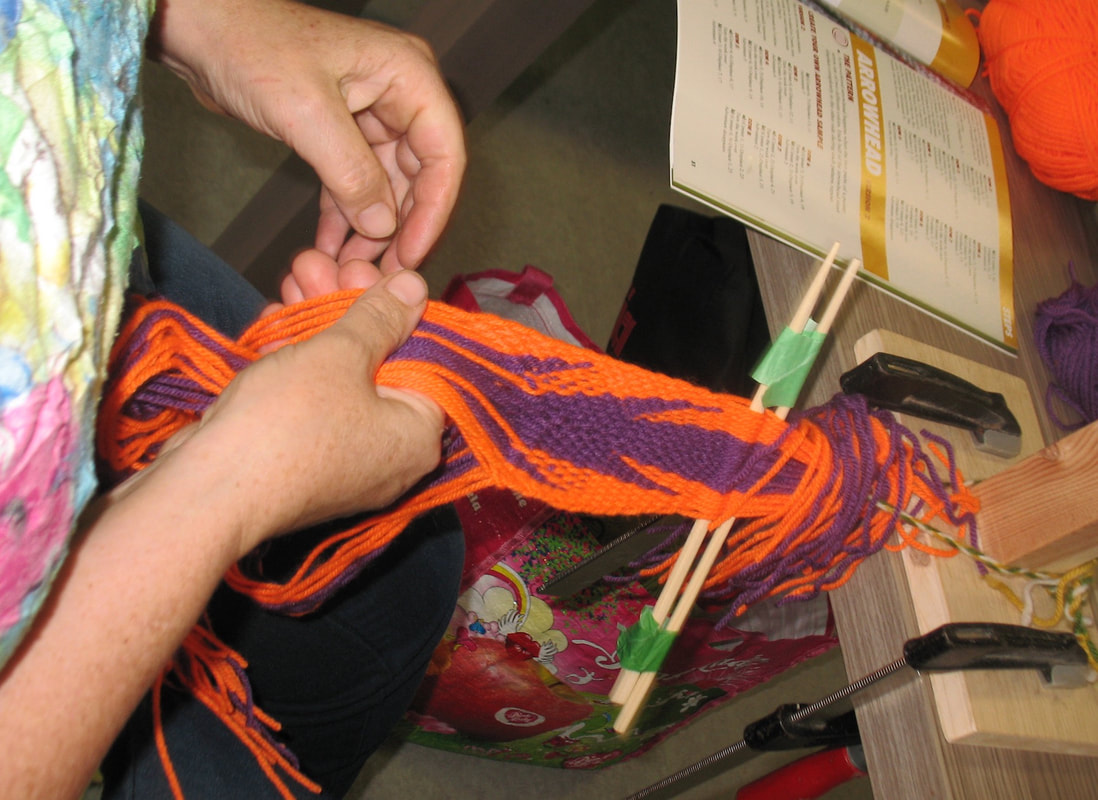
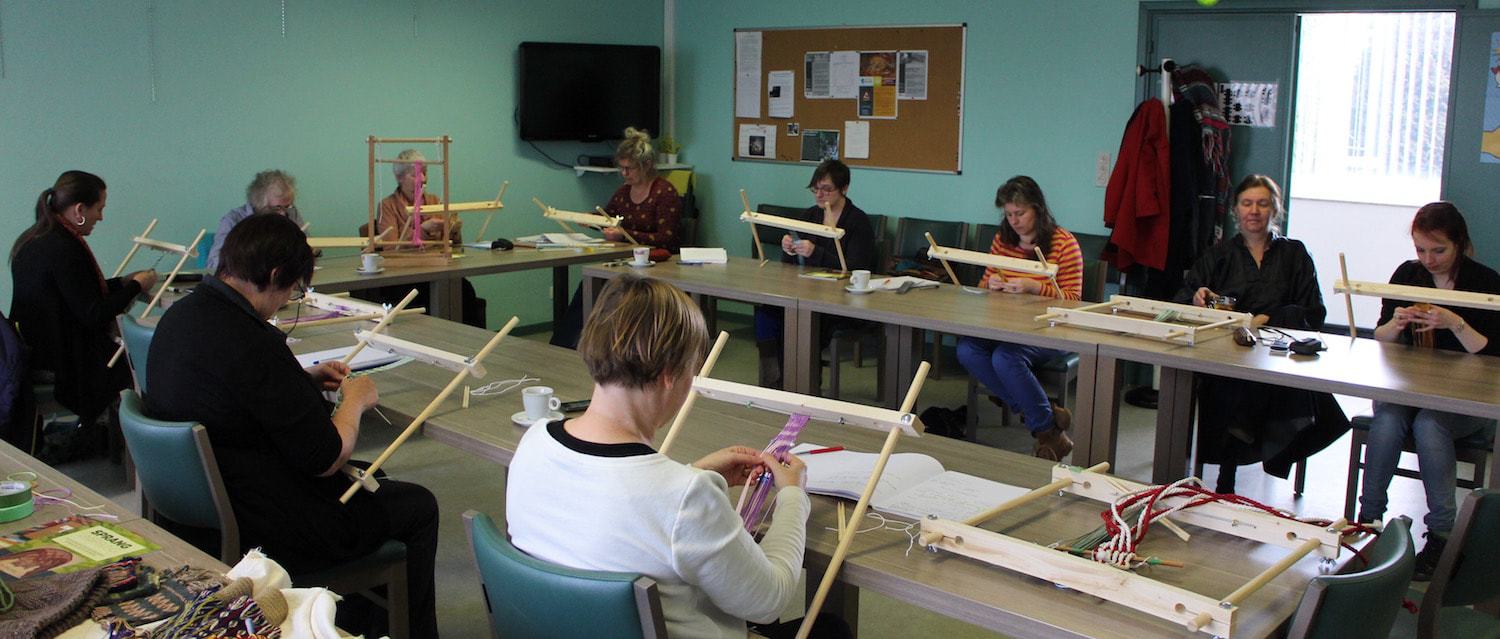
On to the mainland of Europe. Thanks to Frieda who met me at the train station in Antwerp, Belgium. I taught classes in the Belgian town of Sint-Job-in-‘t-Goor. 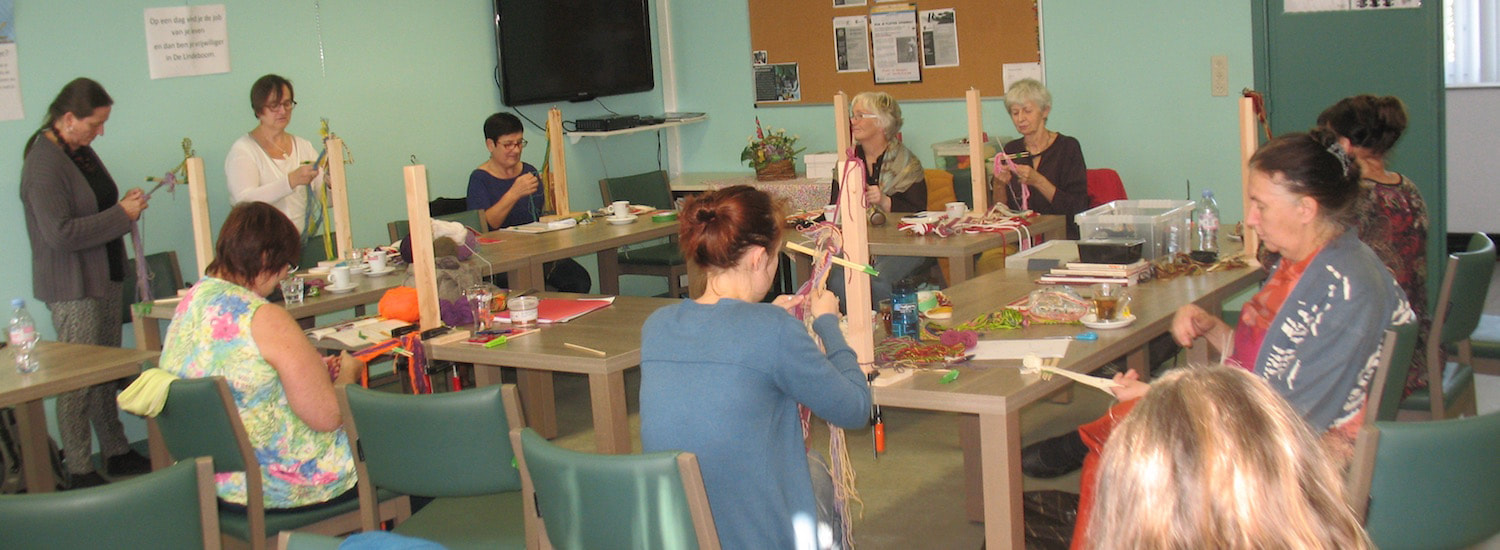 Organizer and hostess Ina had some ‘braiding stands’ made up for the finger weavers. This was an ‘advanced finger weaving class’, the follow-up to a previous session. Participants explored some of the variety of patterns possible.
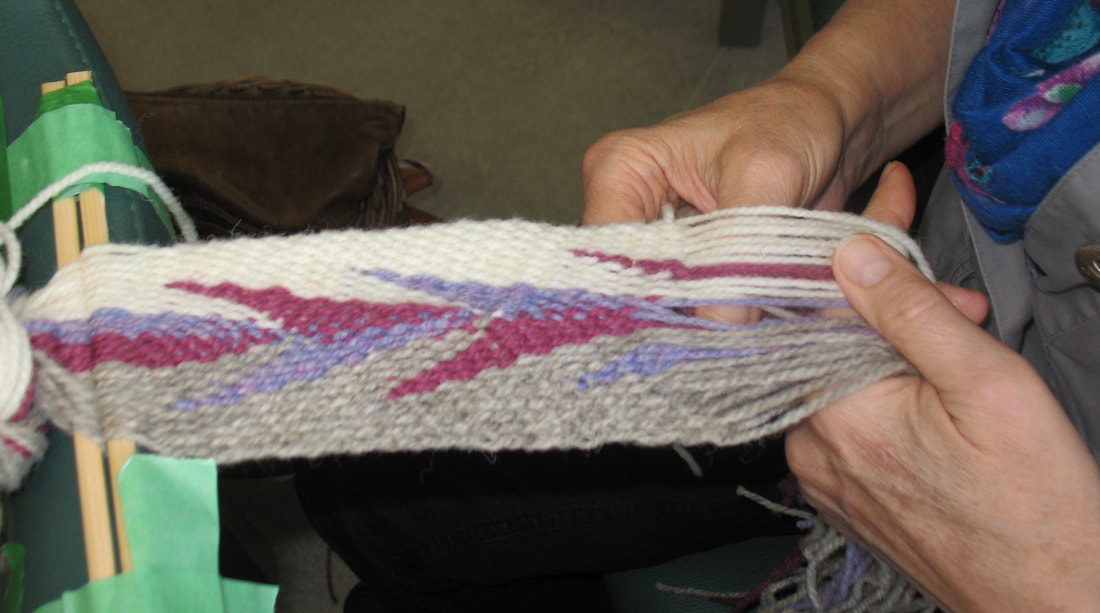
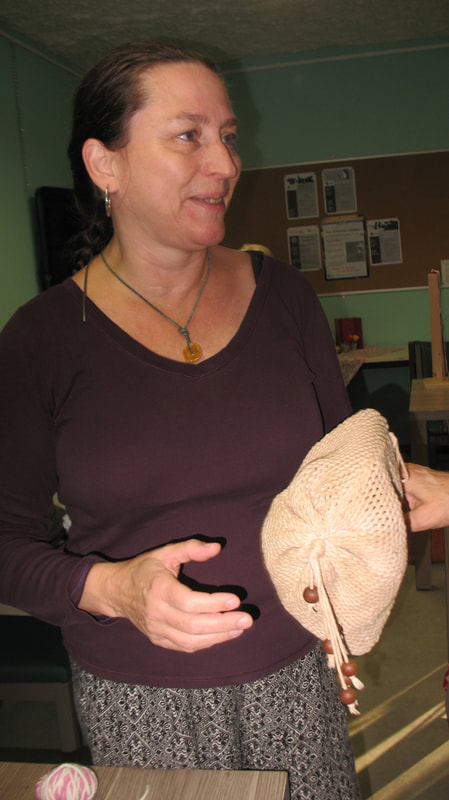
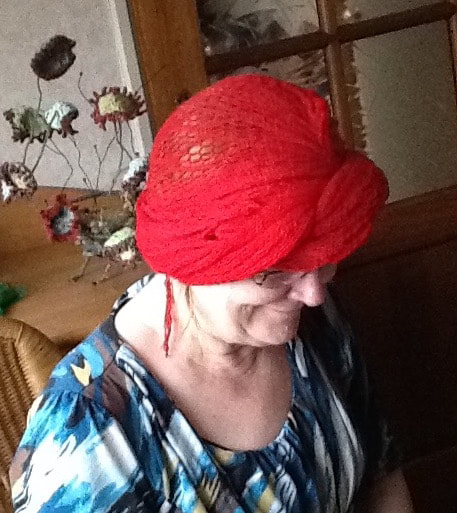
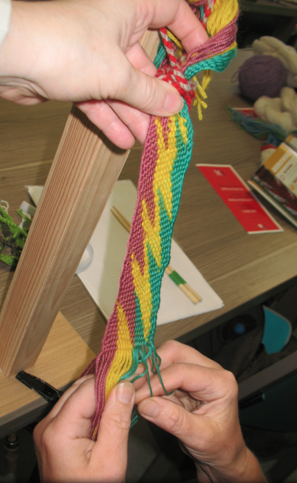 lightning pattern The following day was a sprang class. Pauline brought a sprang cap that she had made after the sprang class last year.
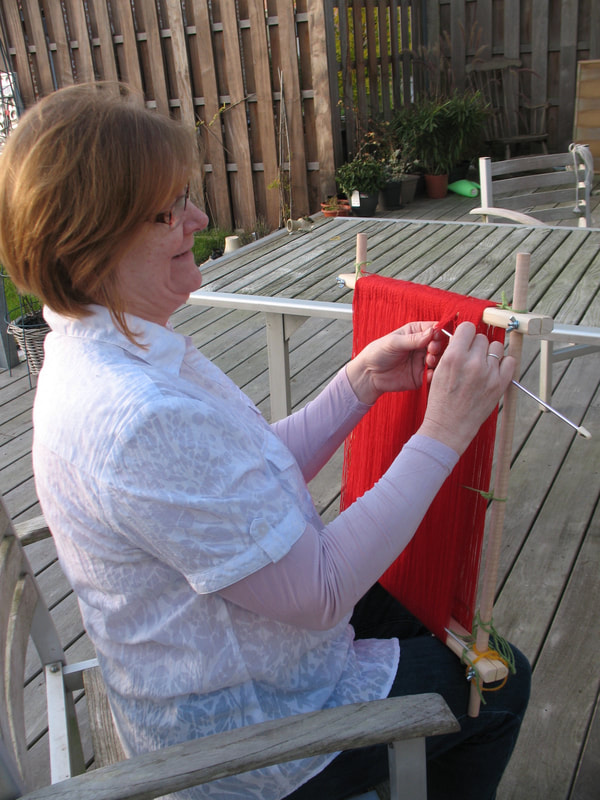
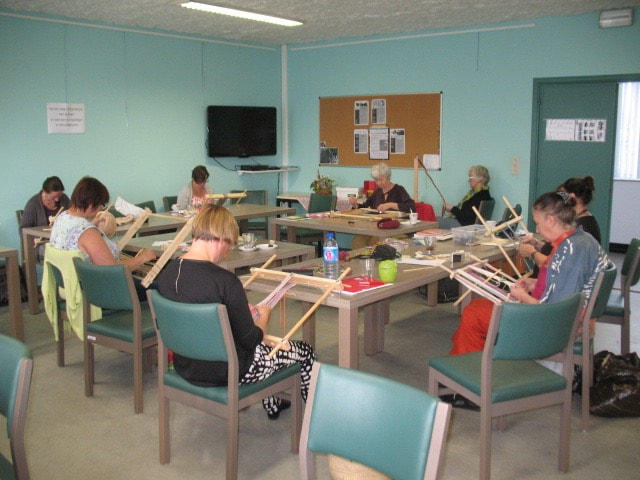 The advanced sprang class explored circular warp. By then it was time for a rest. My friend Karin took me home. I sat in her backyard and worked on other sprang projects.
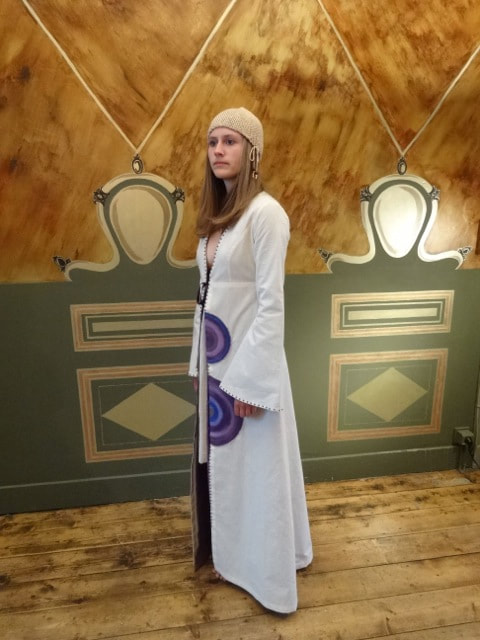
Accepting an invitation to visit a very talented bobbin-lace weaver (this sister of a Winnipeg friend) I travelled to Braunschweig. Between discussions on the subject of bobbin-lace, finger weaving and sprang, we toured through downtown Braunschweig, and made a visit to the top of the newly rebuilt ‘Schloss’ and the Quadriega. 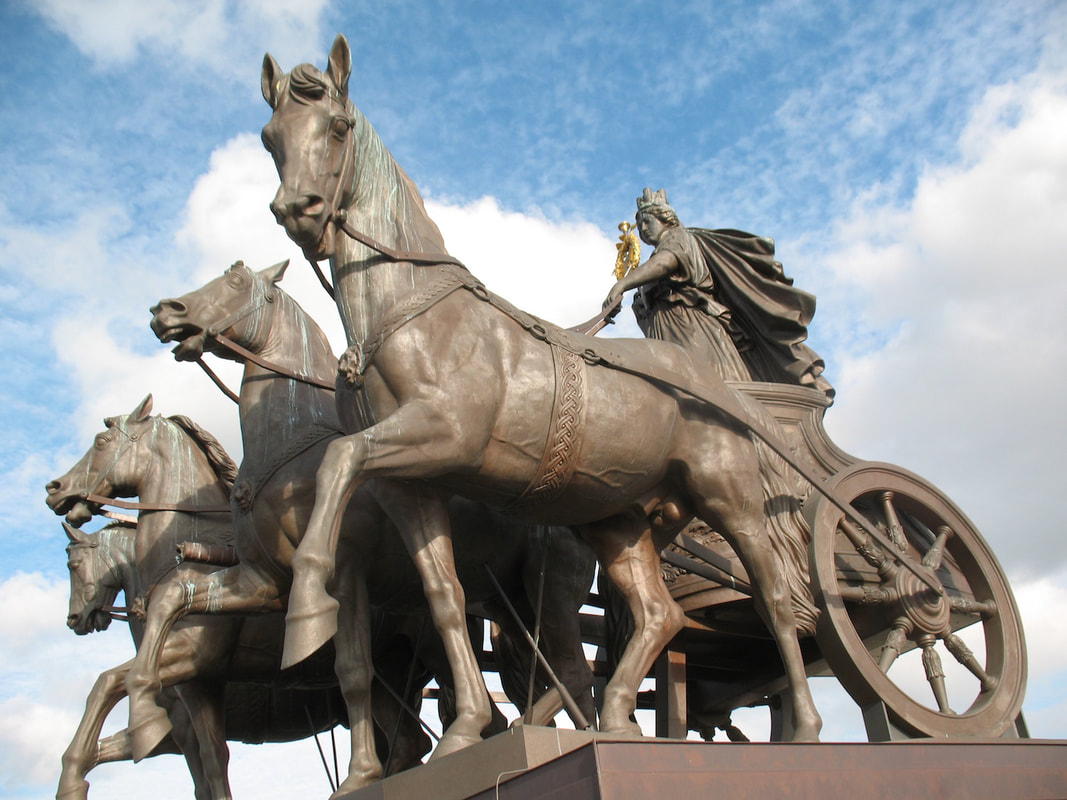 The “Quadriega” is on the top of the “Schloss” (castle). You get there by way of an elevator and stairs. On to the Netherlands. Braid Society member and friend, Ria toured me around the Netherlands. 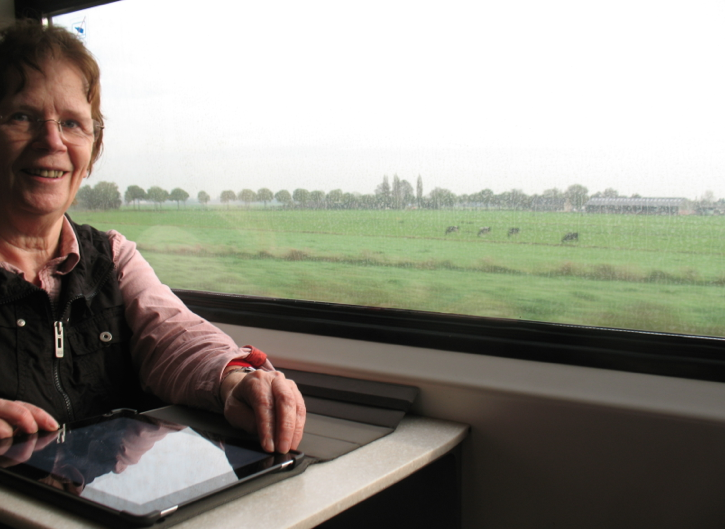 Ria kept track of the train schedules, ensuring we made the connections. We had been invited to the island of Terschelling. 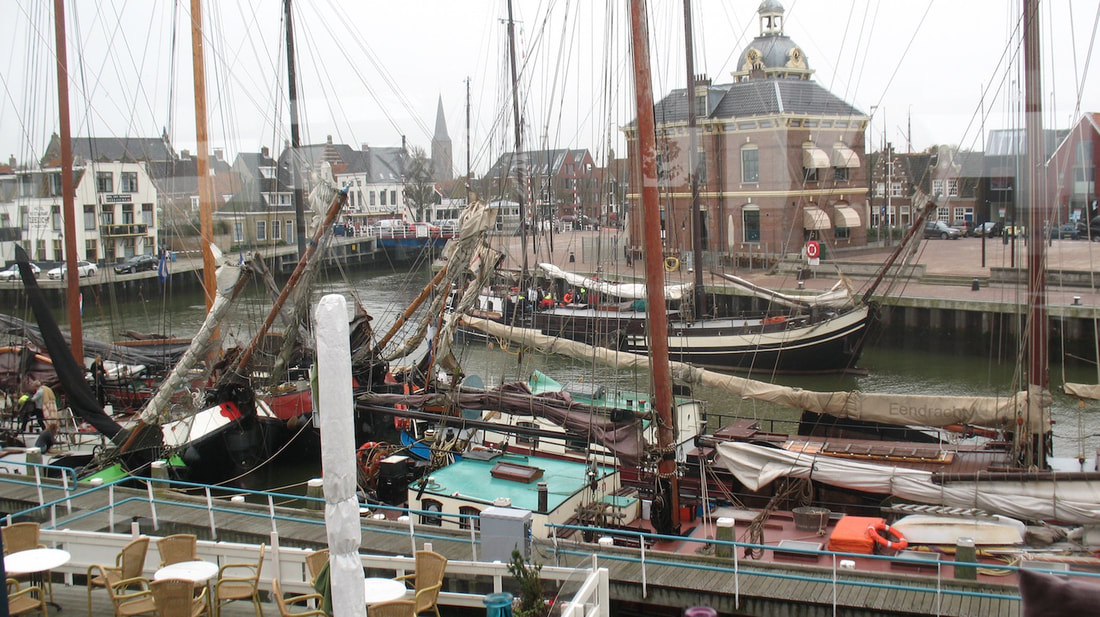 You get to the island of Terschelling by way of a ferry. Here’s a scene at the harbour. Resident of Terschelling, Marianne, is a very talented textile artist. She also has an amazing collection of textiles. She introduced us to the neighbourhood chickens. 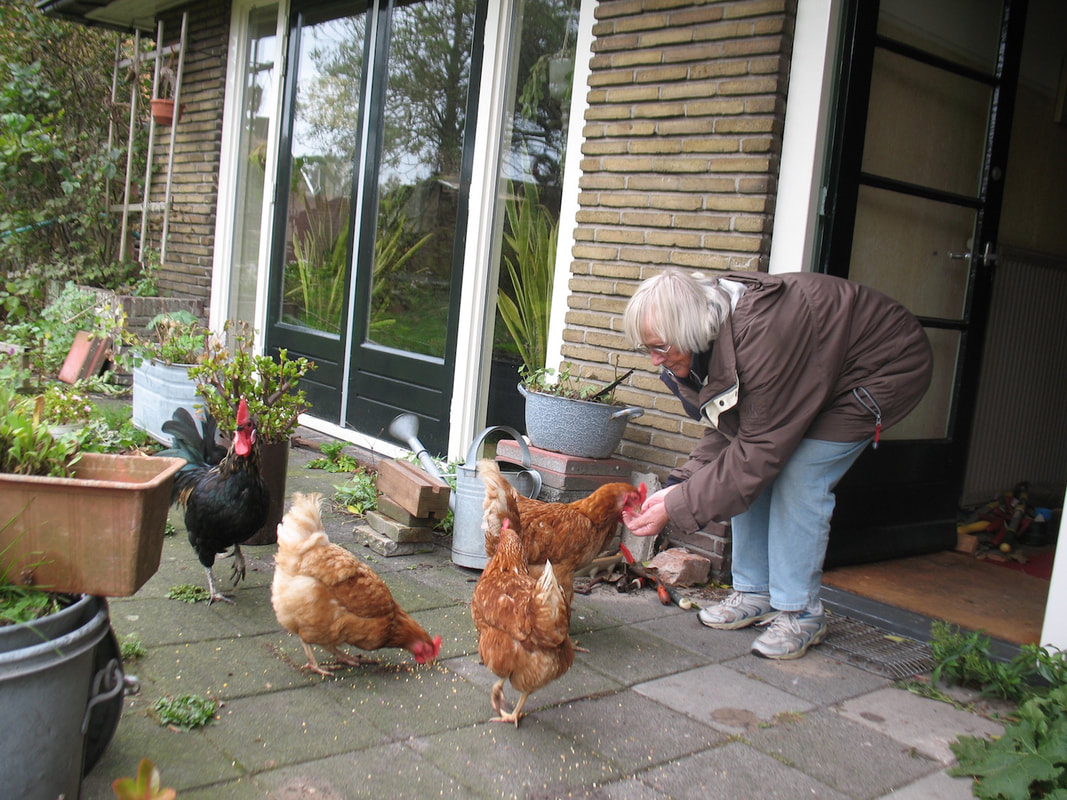 Chicken neighbours eat out of Marianne’s hands. While on Terschelling, I visited the local yarn store, Tante Lies. Come to find out, I’d been volunteered to give a talk on the subject of sprang at the Tante Lies yarn store. I brought along a frame, and people were invited to give it a try. While in the Netherlands I was privileged with a visit to another Ria. 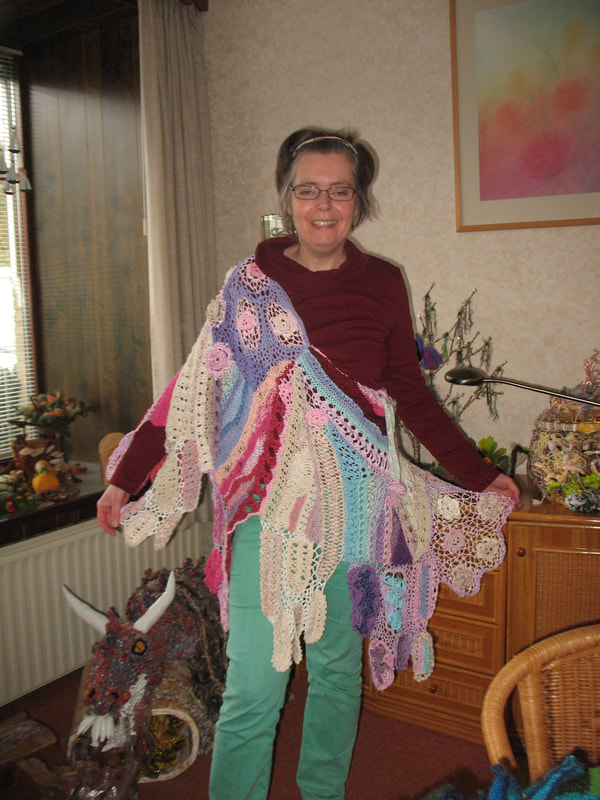 Ria is an incredibly creative person. Check out her website www.feathers-and-dragons.nl On Nov 1, I taught a sprang class in The Hague at the textile studio known as DeSpinners. Thanks to Dineke and Katia, this was a follow-up to a finger weaving class I taught last year. 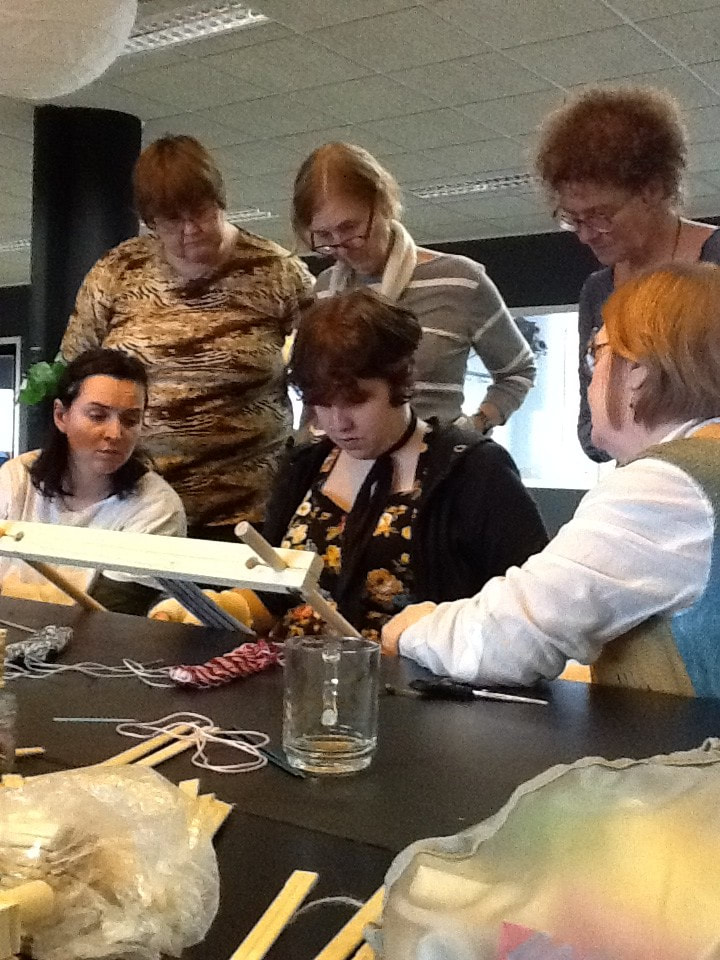 Sprang workshop at DeSpinners in TheHague. What a pleasure to spread the good word about these amazing techniques to individuals interested in learning. On to the final destination, Lyon, France. 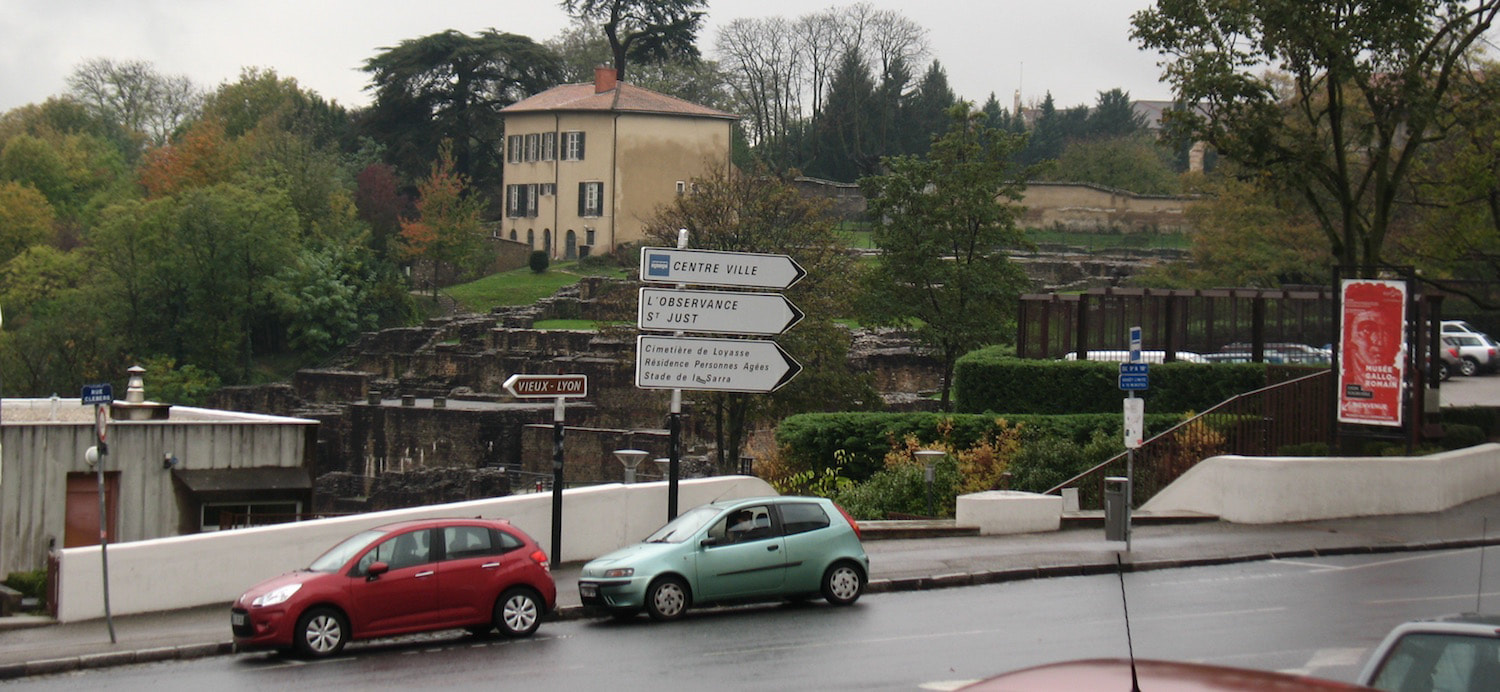 The entrance to the Greco-Roman museum in Lyon, France, is easy to miss. Look carefully and you can see the amphitheatre in the background. The Greco-Roman museum is built into the Fourviere hillside, right beside the remains of two Roman amphitheatres. If you’re in Lyon, you really should stop in, it’s a ‘must see’. The theme of the month at the Fourviere Gallo-Roman Museum in Lyon was textiles. I had been invited to give a lecture on the subject of sprang bonnets. This is the reason I’d been working on that sprang turban. Wednesday I presented a workshop for children (and their parents, grandparents) on diverse braiding techniques. Thursday I presented my lecture and workshop on the subject of sprang. I brought along several replica sprang bonnets that I have made. Sprang frames were available and seven women took the opportunity to explore the basic sprang technique. The Gallo-Roman museum had a lovely little sprang bonnet, on loan from the Textile museum. 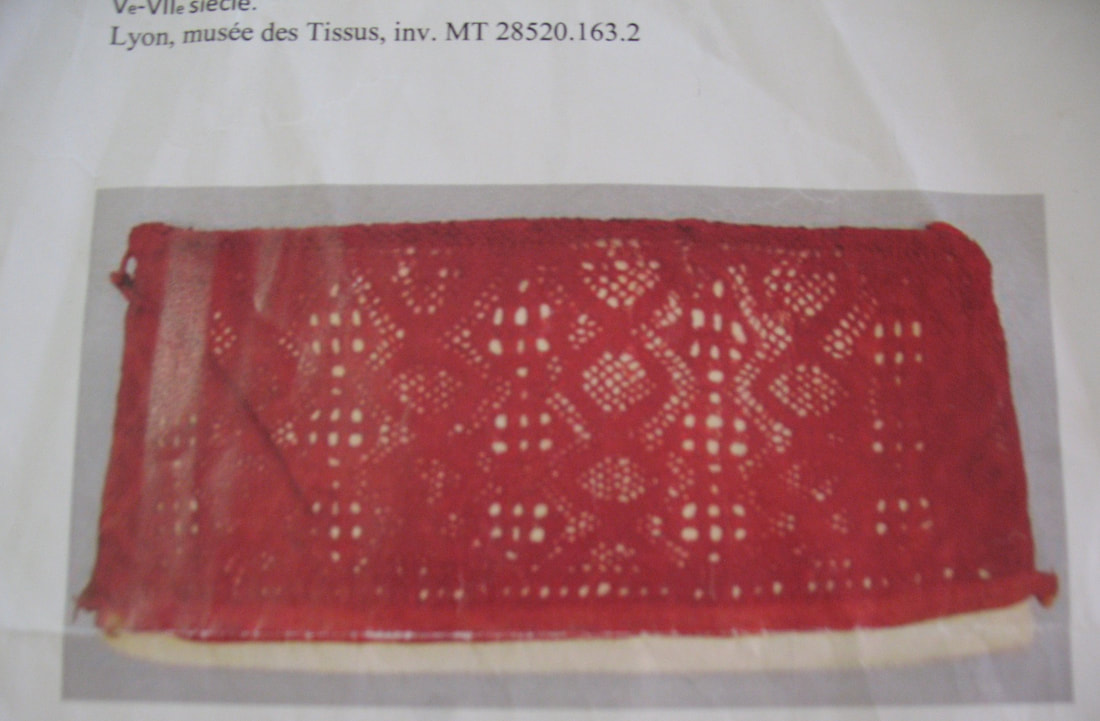 This is a low-resolution image of the bonnet, shared with me by the curator. The fiber is a very fine (looks like sewing thread) wool. Back at home, I’m now trying to map out the pattern. 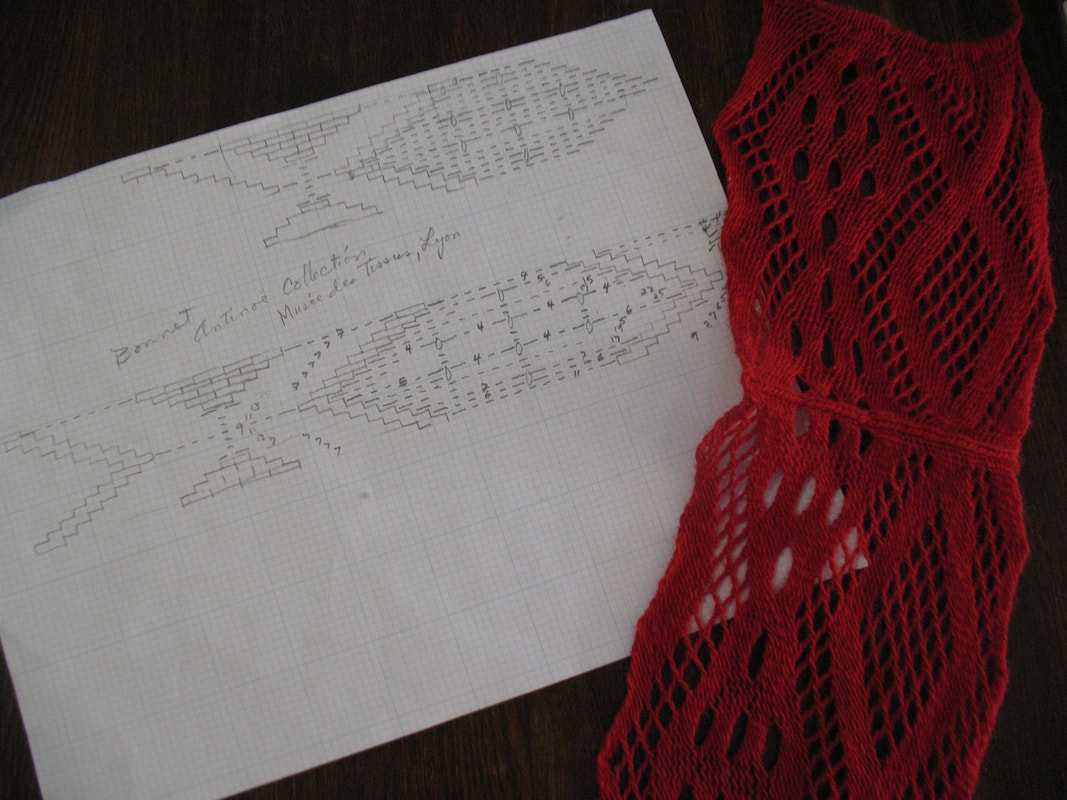 My grid pattern and sample, trying to imitate the pattern of holes. My flight to Belgium stopped over in Montreal. They were having a snowstorm, and I worried that the plane would not be able to take off. Not to worry, we arrived on time in Brussels. 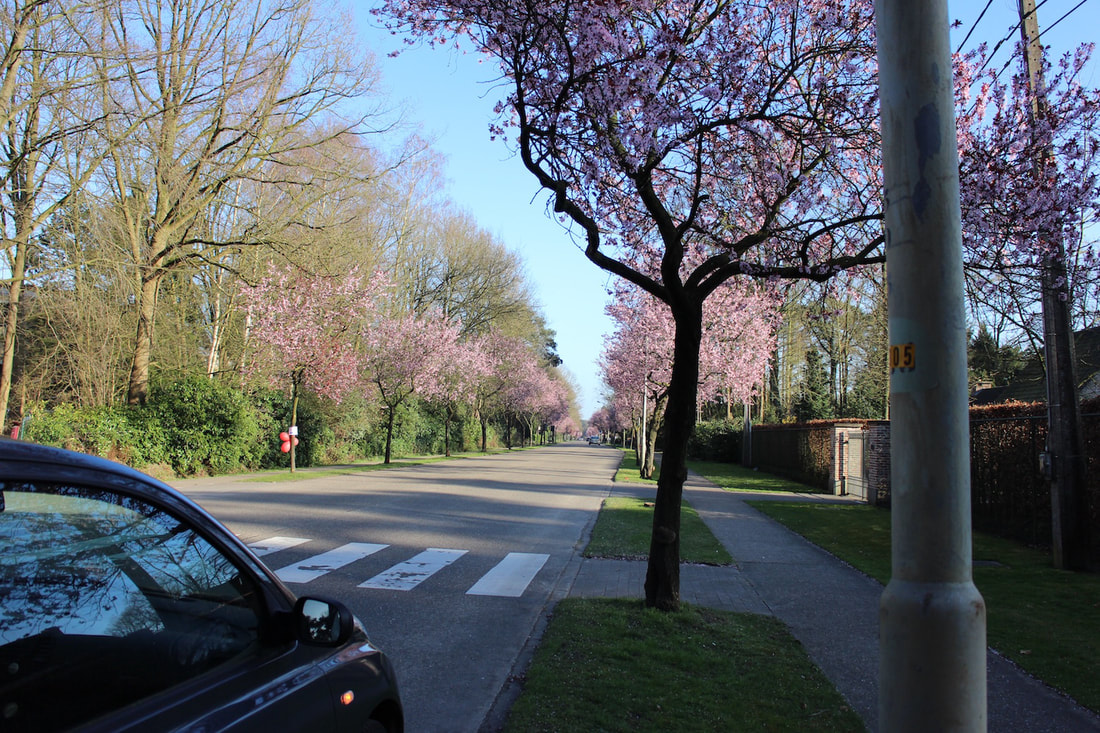 The trees are budding here. I taught two sprang workshops in Sint-Job-in-‘t-Goor. Some of the participants had taken my finger weaving workshop last fall. They brought items they had made to show me.
I led two sprang workshops.
A big thank you to Ina Verhulst for organising these workshops. I also met with the textile group called Metamorphose. They explored finger weaving. 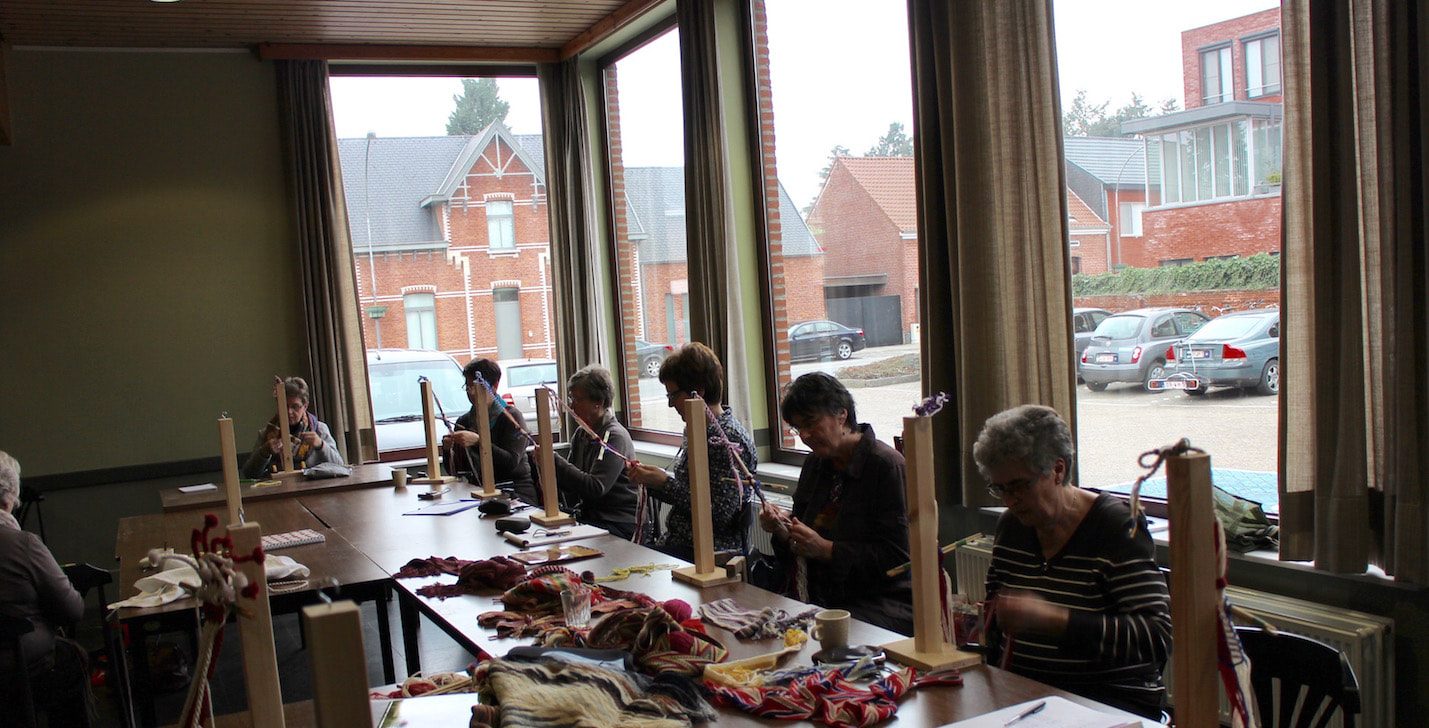 The group called ‘Metamorphose’ explores finger weaving. 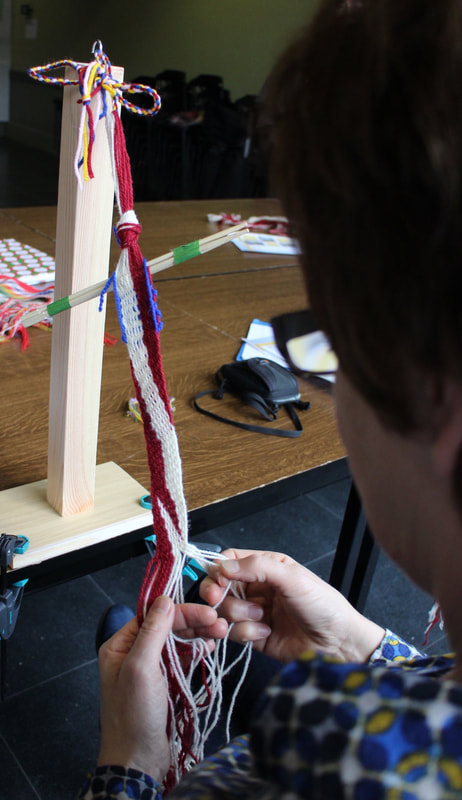 Success with the sawtooth pattern 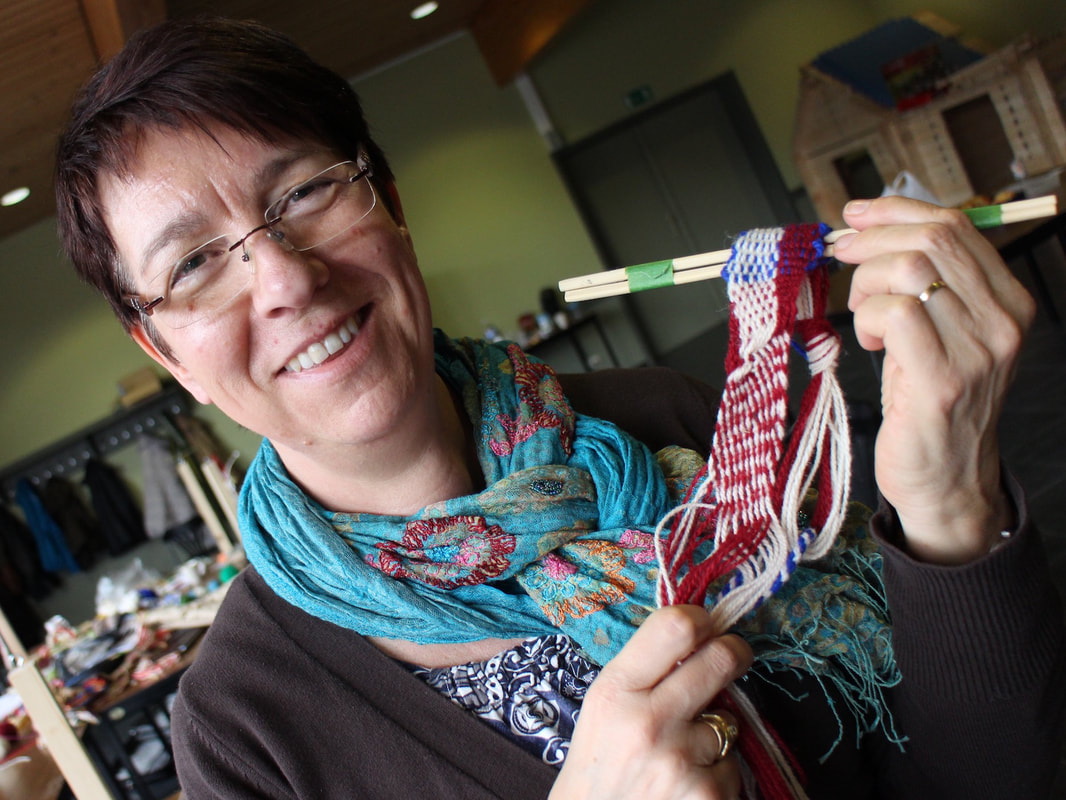 Some very creative weavers in the group. Been working on a variety of projects. Made a couple of variations of an intertwined bag.
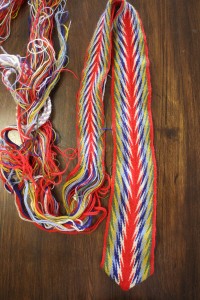
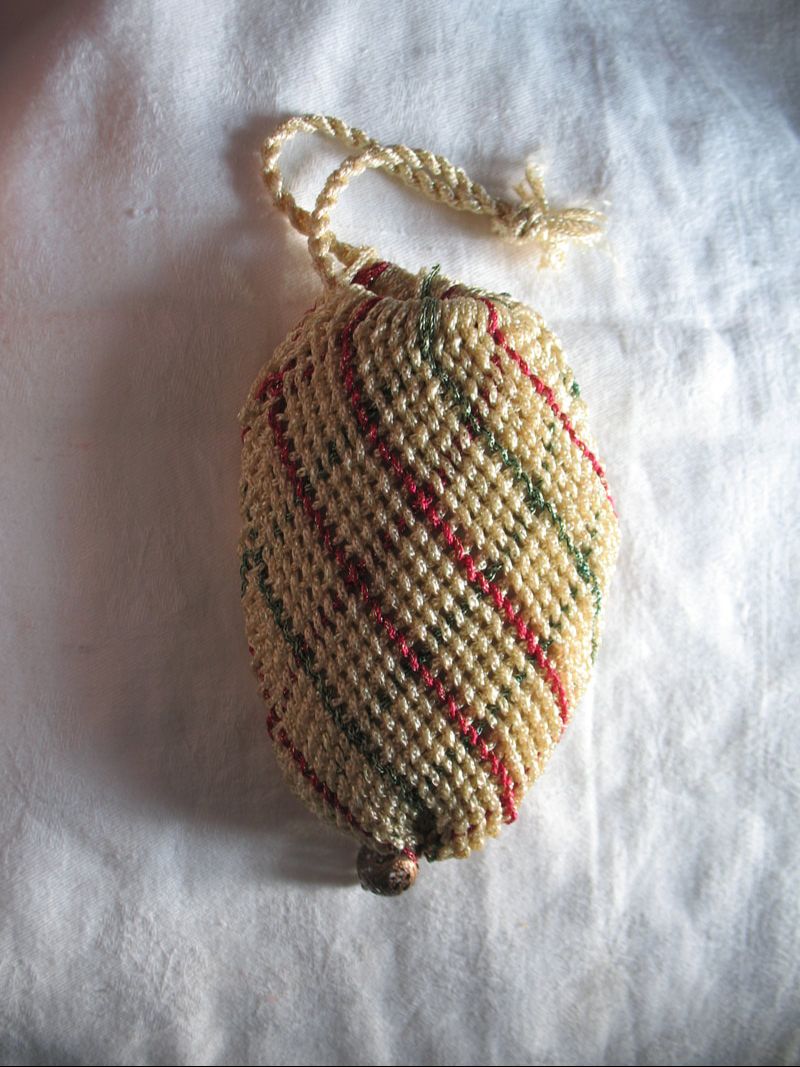
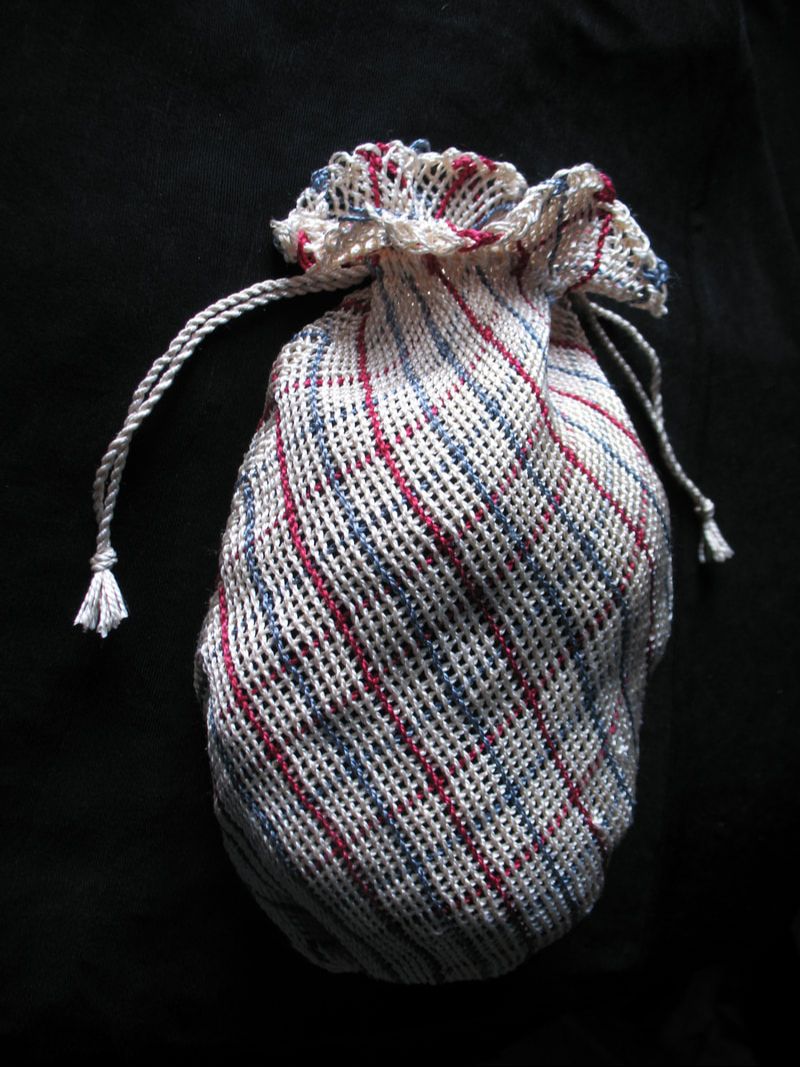
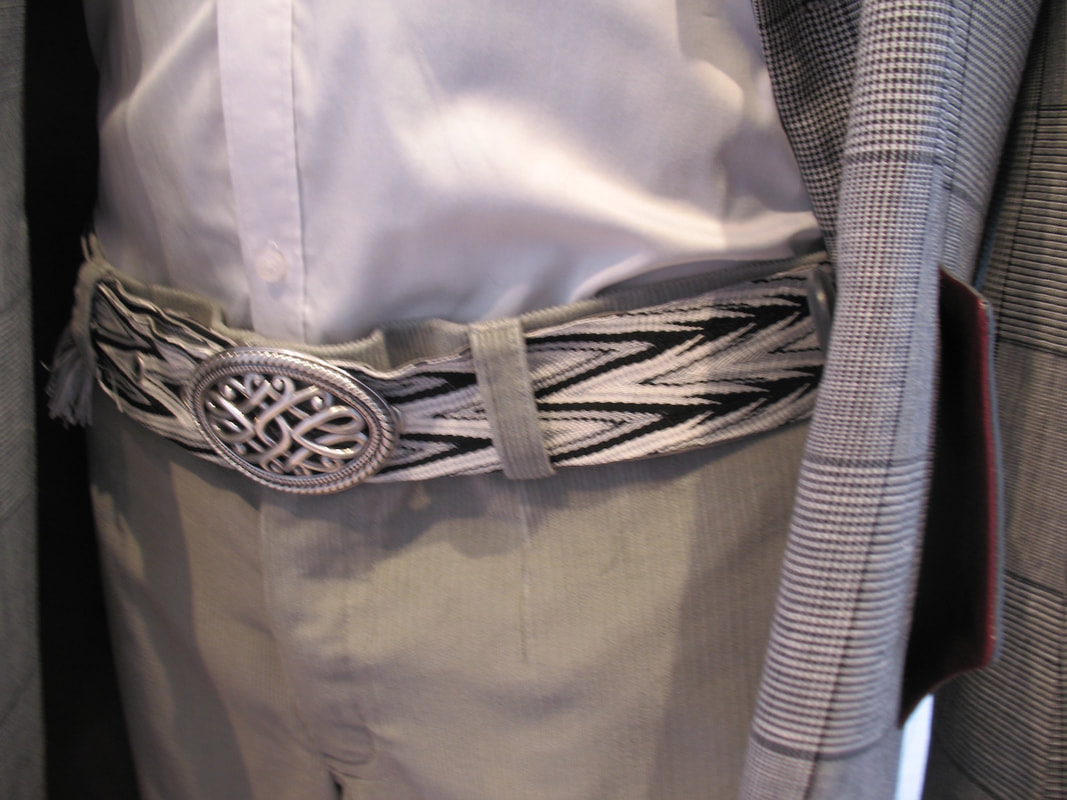
Now these bags are sprang bags. They come from a figure-8 warp, the join line is the bottom of the bag. They were worked in intertwining rather than interlinking. Not as stretchy as interlinking but attractive in their own way. Also made a couple more hats. Here are two hats, one has twice the number of threads. One is sort of a hair net, the other, is much more like a tam, both made from the same skein of red sock yarn. 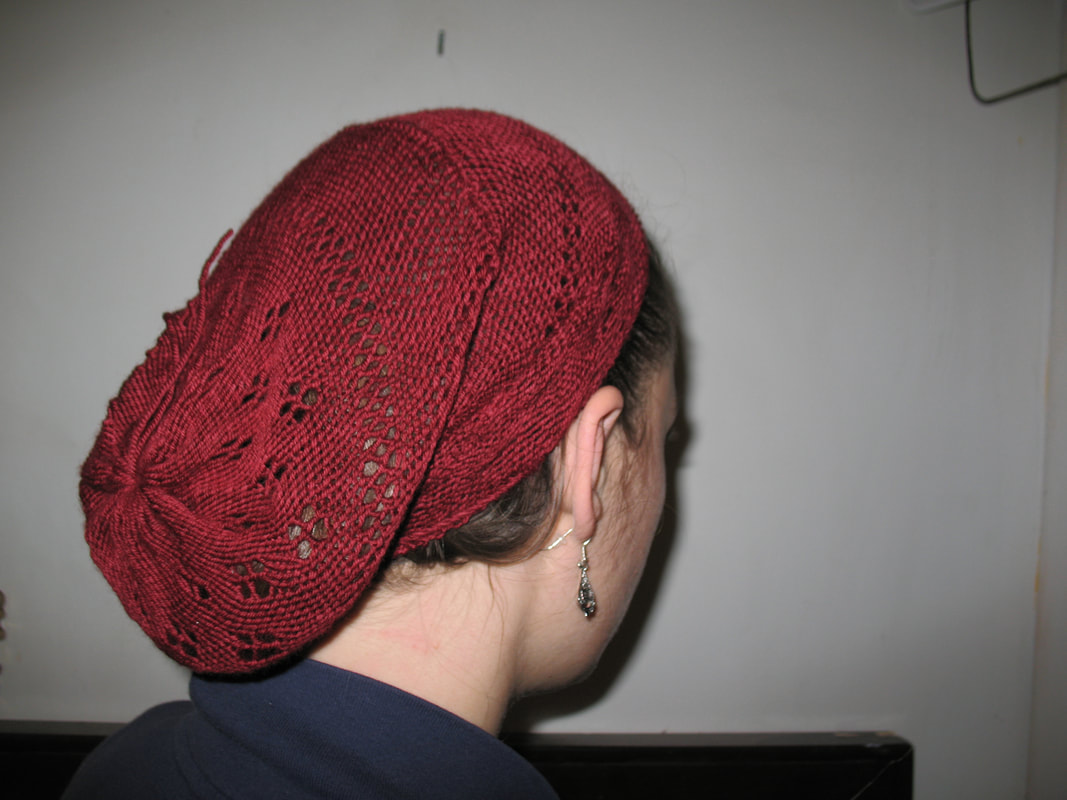 The second hat, using more threads Now, freshly ‘spranged’ they always curl up funny. Do not let this discourage you. Blocking is easily done, and remedies the curling when you’ve used natural fibers. 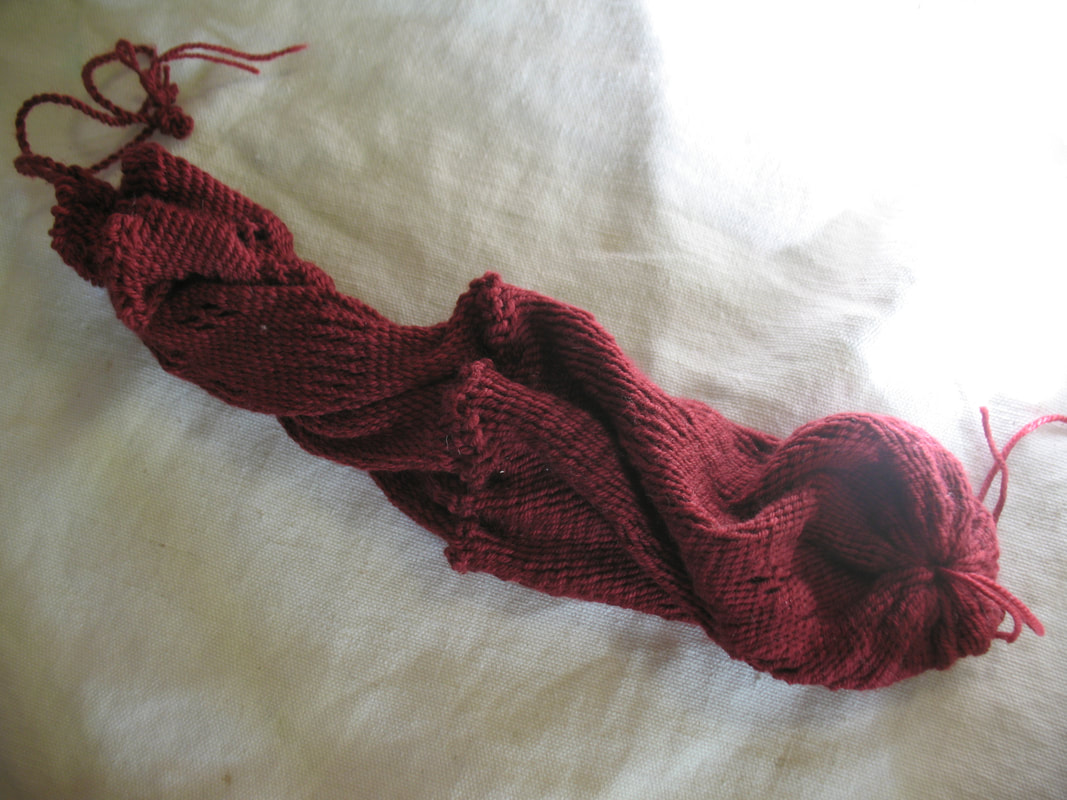 Fresh sprang always wants to curl. This is remedied by blocking. I soaked the hat, and then stretched it around a kitchen bowl. 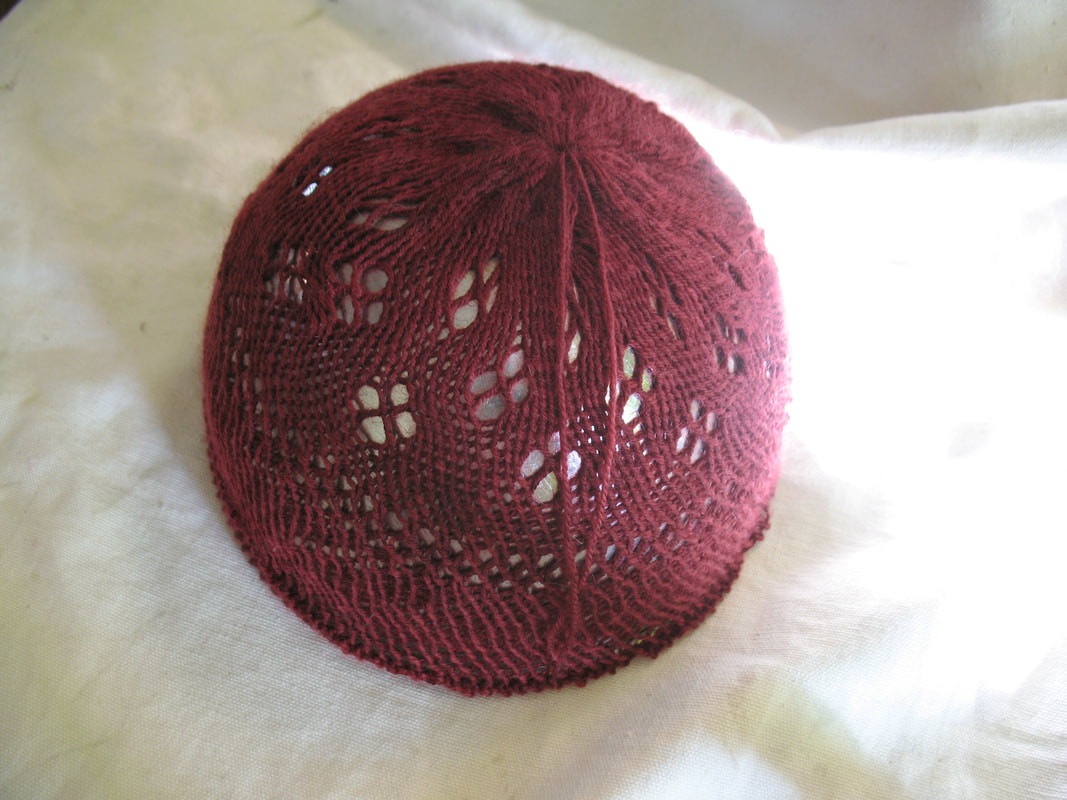 Red hat being blocked around a bowl Working on some items to display in a local yarn store, using yarn from their shelves. I am reminded of another reason I love sprang. When I knit with a rainbow skein, the colors tend to muddle if I’m not careful. With circular warp sprang, the colors are as lovely in the finished article as they were in the skein. 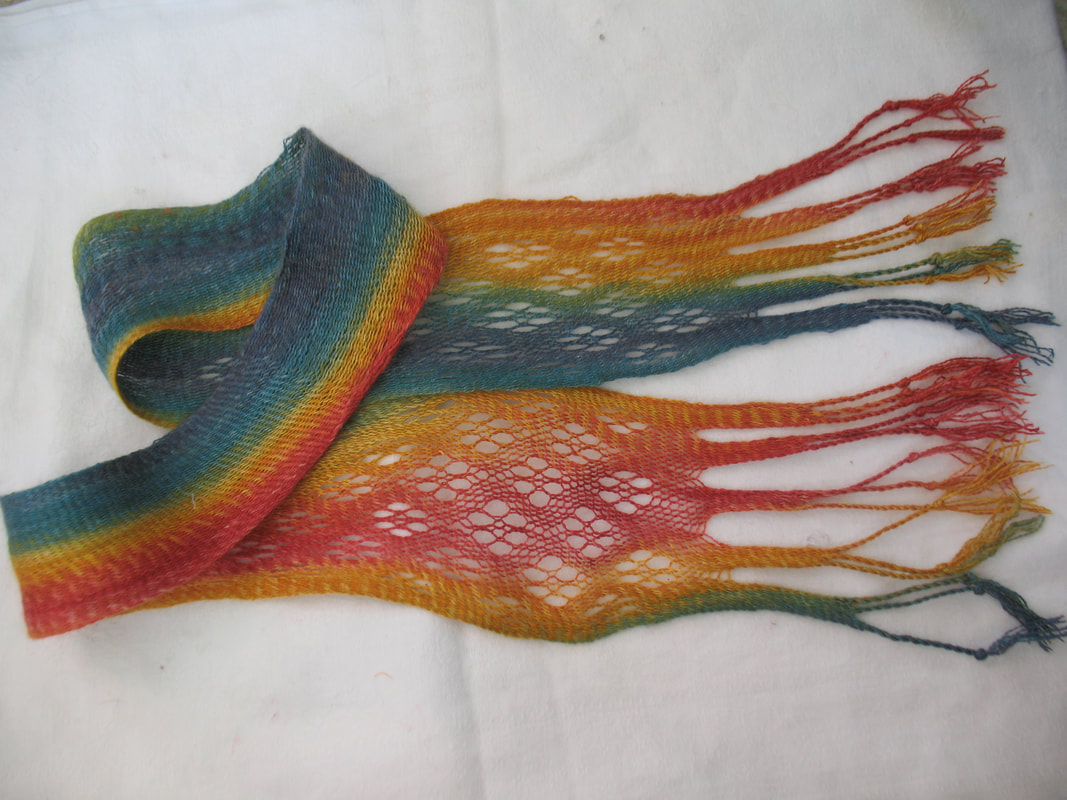 Rainbow skein makes a lovely scarf I’ve been working in a local school. Younger children have been learning about three-strand or four-strand braiding. For those in grade 4 and 5 I brought along rigid heddles and had them weave strips or “sashes”. Here are some patterns you can make with a rigid heddle loom. Now, if you have all threads of the same color, you get a solid colored cloth. A single thread of a contrasting color makes a broken line. 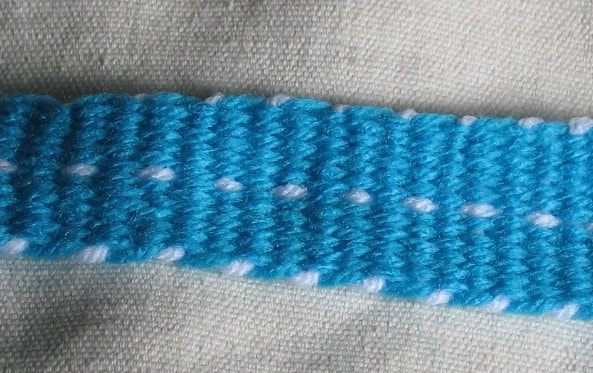 single thread makes a broken line OK, I had blue threads and a single white thread in the warp and then used white in the weft. What happens when I use two contrasting threads on that blue background? 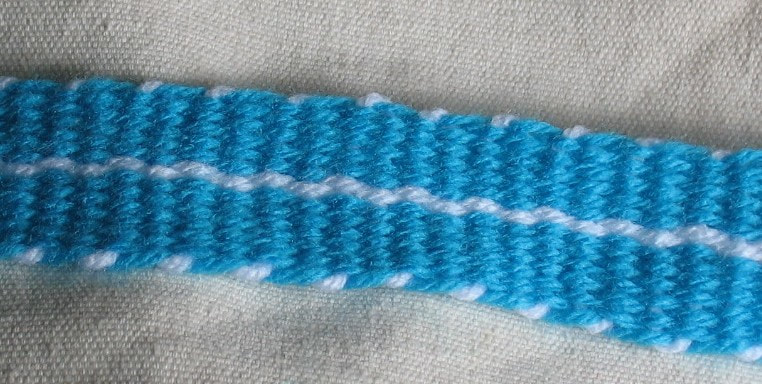 Two contrasting threads Two contrasting threads makes a solid vertical line. What happens when I use three contrasting threads? 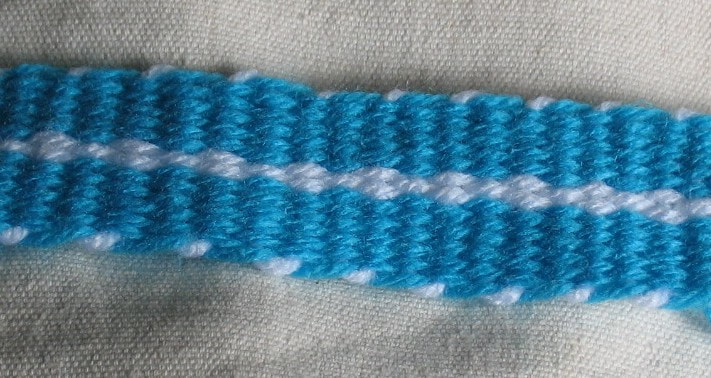 Three contrasting threads Three contrasting threads make a line that is fat-skinny-fat-skinny. Now for four threads. 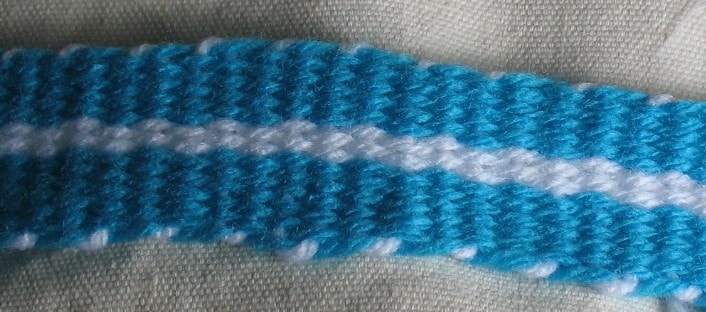 Four contrasting threads Four threads of a contrasting color make a solid line, a bit fatter solid line than the two threads. What happens when I use five contrasting threads? 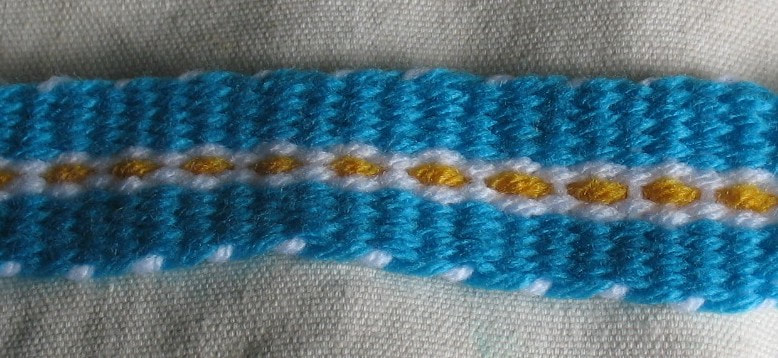 Five threads of contrasting color OK this was really two white, one yellow, and two white. Since 2+1+2=5 this is five contrasting threads on a field of blue. It makes kind of an interesting pattern. Many more patterns possible with a rigid heddle: 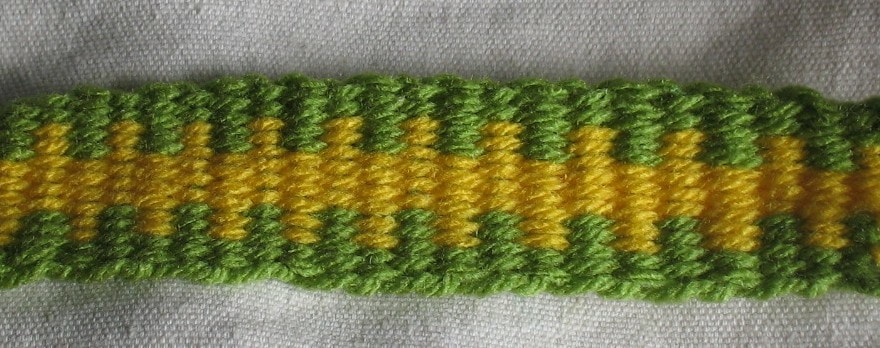 Another pattern All right, here I started with four green threads. Then I put greens in the slits and yellows in the holes for four threads, two of each color. Then I put yellow threads in both slits and holes. Then I put yellow threads in the slits and greens in the holes for four threads. On the other edge I place four greens (slits and holes). When you keep one color in the slits and another in the holes it gives you a horizontal line. Switching colors every four or six threads will give you a checkerboard pattern. 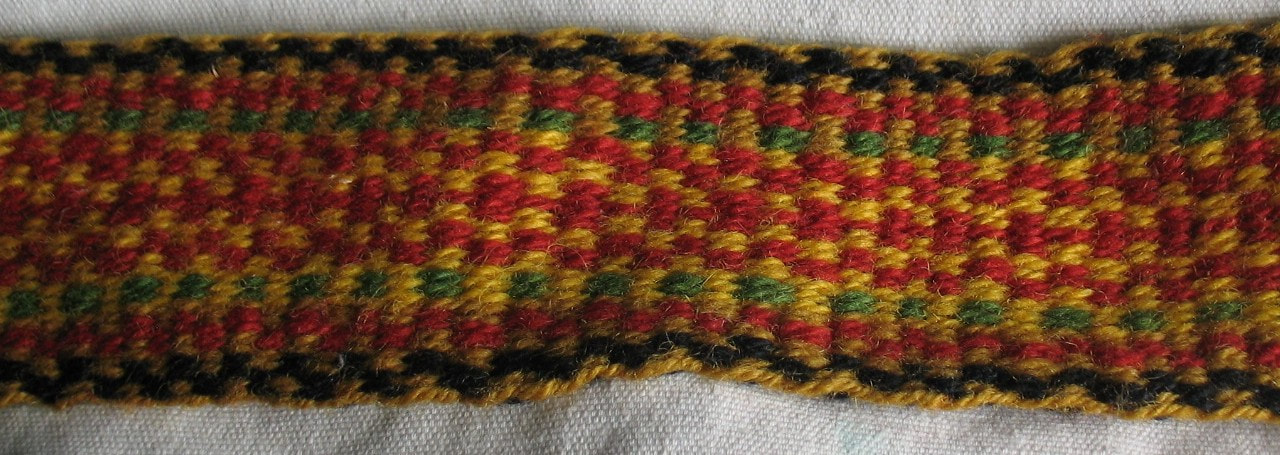 checkered pattern Here are some of the strips woven by fifth graders. 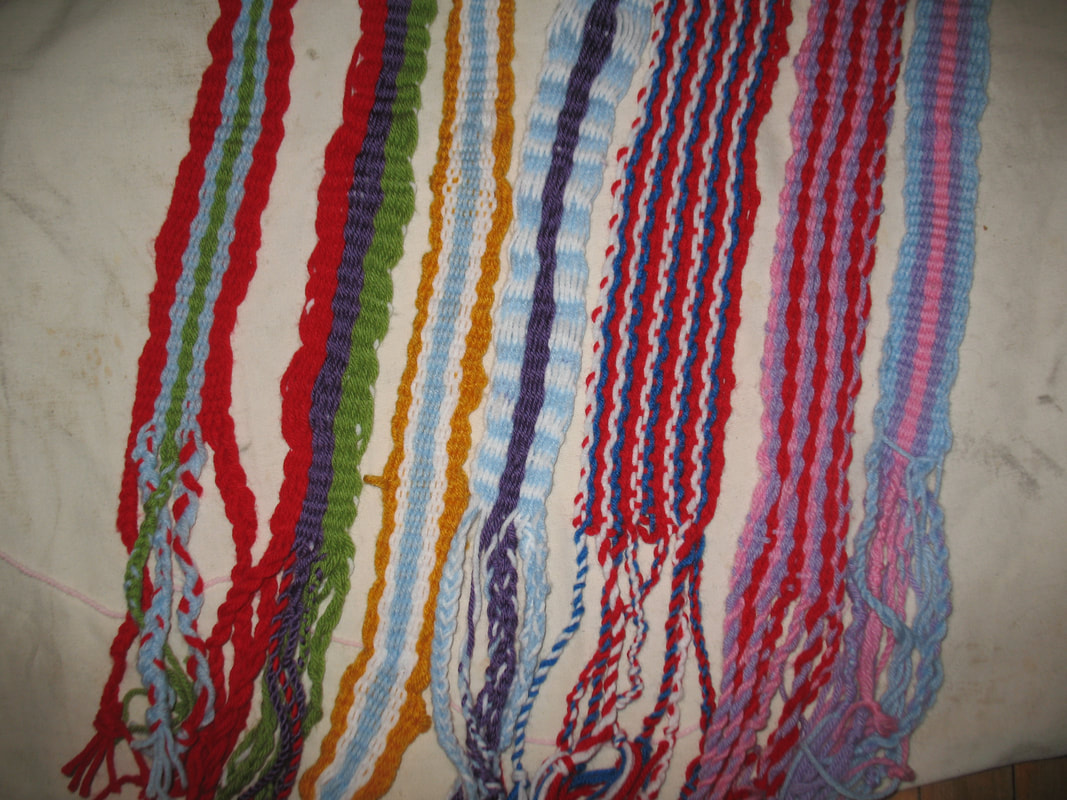 strips woven on a rigid heddle The numbers are in for another week at McNally Robinson Booksellers. Sprang Unsprung is the bestseller in the non-fiction category for Manitoba Authors, for two weeks running now. Thanks to all my friends who’ve gone out and bought copies. 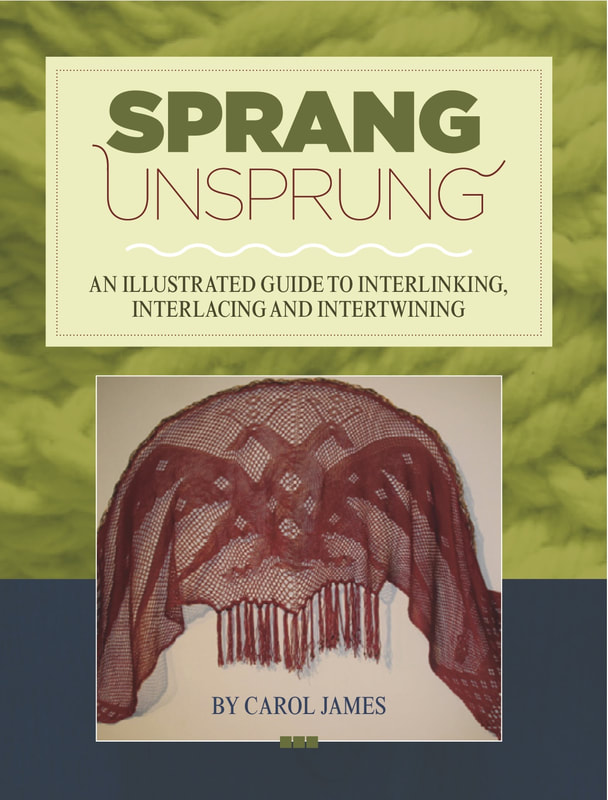 Sprang Unsprung front cover A friend of mine captured the ‘sprang dance’ from be book launch on her camera. I’m hoping to figure out how to post it. The launch was lovely. In other news, I am pleased to be part of a collaborative work. The Alliance Francaise here in Winnipeg, along with the Maison des Artistes brought together a traditional embroiderer from Brittany, Pascal Jaouen, and a visual artist Collette Balcaen to collaborate on a Métis theme. The exihibit opening is this week. My contribution to the display was a fingerwoven belt, made using a very fine silk thread.
These last few months I’ve been busy exploring sprang. I went through Peter Collingwood’s book, trying several of the patterns. Here’s a ‘sampler’ I made, using a dozen: 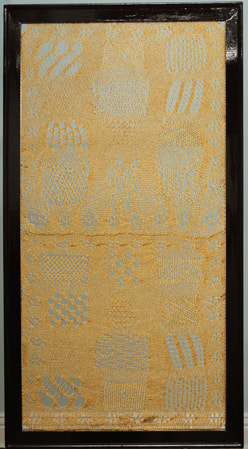 twelve different patterns Photo by Robert Barrow I also explored a 3-D piece, using jute around a wire frame. 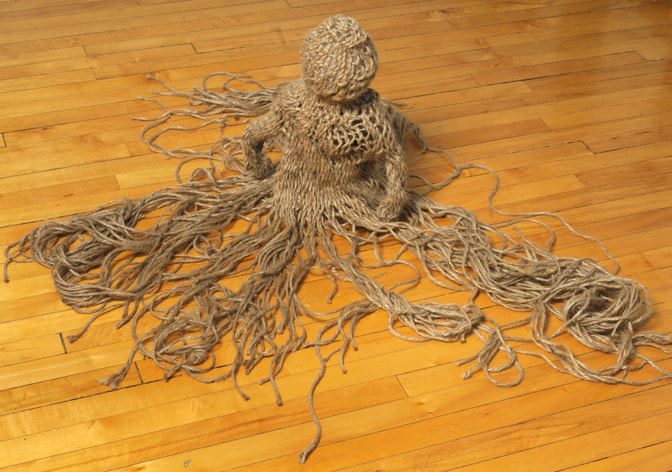 Woven from the crown of the head downward Photo by Robert Barrow Still working on that how-to book on sprang. Re-organized a whole whack of it, trying to avoid repeat information.
I’ve learned to distinguish between the textile structures such as interlinking, interlacing, intertwining, and the method of working, free-end or sprang. It seems that interlinking, for example can be worked with loose ends of threads, ‘free end braiding’ or you can work on a figure-8 type warp, or simple attach the loose ends. When you attach the ends, and ‘trap’ the ‘false weave’ it fills the definition of ‘sprang’. Interesting. More recently I’m very busy giving workshops in grade schools and high schools. It’s Winter Festival season. Local ethnic groups such as the Métis are highlighted, and I’m invited to teach weaving techniques associated with Métis culture. Feb 18 to 27 I’ll be at the Festival du Voyageur pretty much full time. Today’s challenge: some simple color patterns. I started with a vertical stripe, and then recorded how to get the colors to move sideways, get them to mix at the middle, and then how to get them to ‘un-mix’. 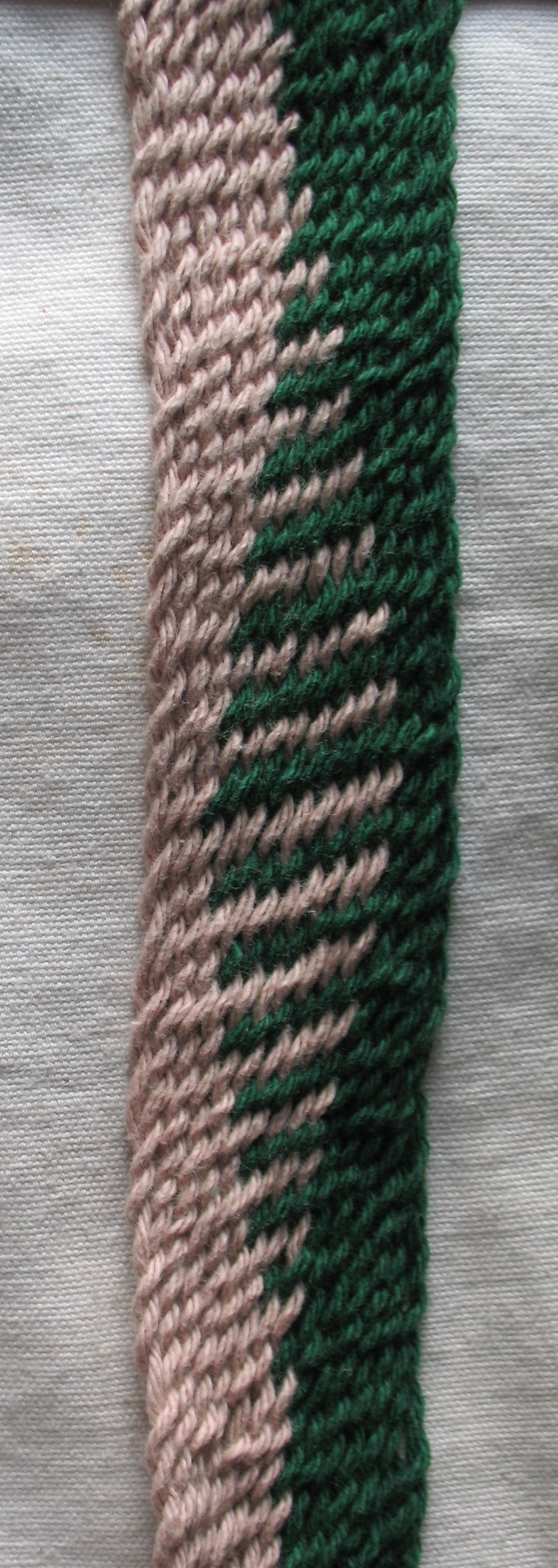 Colors mix, then un-mix Been wanting to try a pair of socks, using the sprang technique. Today was the day. After taking 50 pages of my book to the layout people, I came home and set up to sprang a pair of socks. 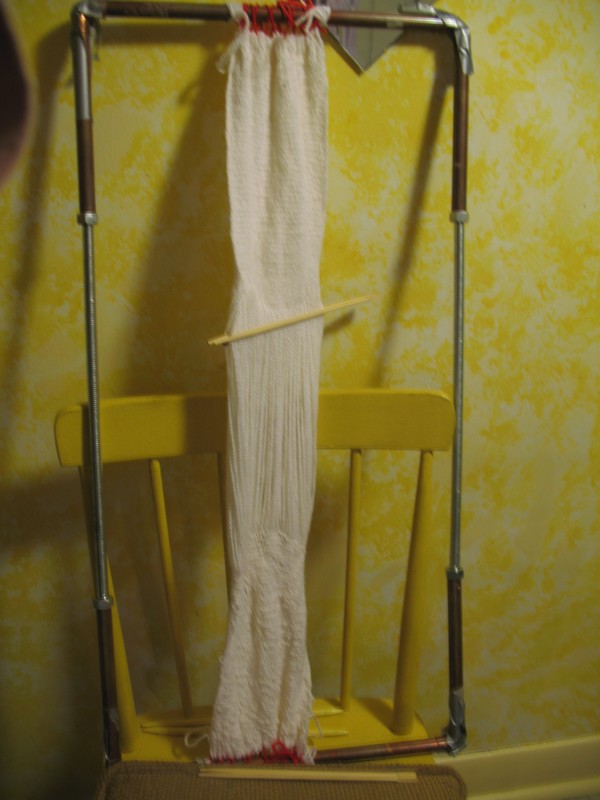 Spranging socks, two at a time I worked several ‘short rows’ over the middle 50% of the stitches for a few rows. I’ve also been playing with different means of finishing the cut ends. Here I pulled each strand back along the path it travelled over the past two rows. It makes a nice fringe just below the edge. 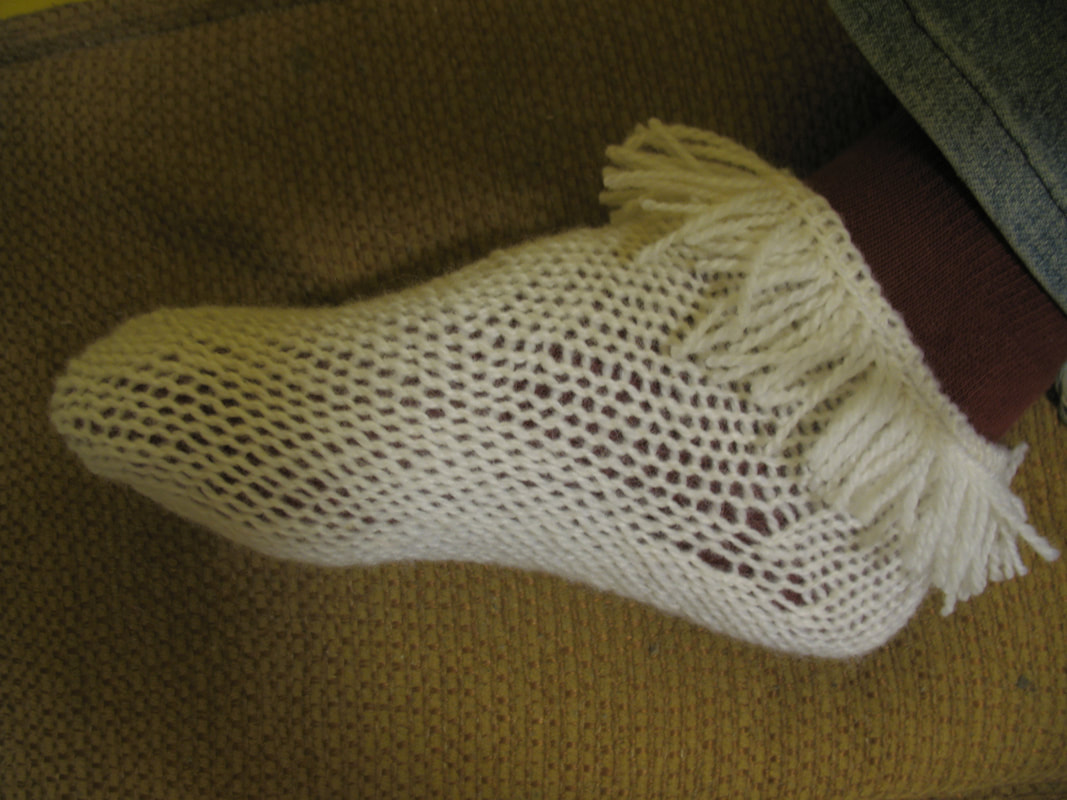 short row heel sprang sock |
Categories
All
Archives
May 2023
Categories
All
|
 RSS Feed